 Sock Wholesalers
Page last updated: November 2, 2026
Socks with faces turn on the crop, the eye line and a signature
A face on a sock is the one image where a small error is visible to everyone who knows the person, which is a different kind of problem from printing a logo. This page deals with the three things that decide whether a printed face reads: the crop, which on a sock is far tighter than on a screen; the definition left to the eyes and the mouth after the process has taken its share; and the permission behind the picture, since a face belongs to the person wearing it rather than to the buyer who ordered it.
The table underneath is the sheet a face run is built on. Published lines are printed elsewhere on this site and read the same here; the crop, the skin reference and the permission the file travels with are quoted lines, settled on the proforma invoice against the approved sample.
When the face is the whole design, the margins get decided first
Each card takes one thing that decides whether a printed face reads, and points at the page on this site where that point is already written down.
The crop keeps the eyes and drops everything behind them
A face on a sock is small, so head and shoulders fills the panel and the background is noise that costs definition. Crop tight, keep the eyes on the flat of the leg rather than wrapping them round a seam, and treat whatever sits below the chin as disposable, because the sock will take less of the picture than the screen showed you.
Where it applies: Portrait ranges, club and team socks, family gifting.
You decide: Which part of the frame is the face, and where on the sock it sits.
Evidence: what a flat file cannot show about a finished sock — see the design process page.
Eyes and mouth are what carry, and only just
A knitted face loses lashes, freckles and the modelling around the eyes, so a knit reads a face as a mask while a printed surface holds the features. Either way the test is the same one: the eyes and the mouth have to read as themselves at the size the sock allows, and a face cropped to fill more of the panel reads better than a smaller one with more around it.
Where it applies: Portrait panels, cartoon faces, character ranges.
You decide: The route, given the face and the size the panel allows.
Evidence: what the sample stage proves — see the sample policy page.
The face belongs to the person in the picture
Before a portrait runs, the desk asks for written confirmation that the person in the image, or their guardian where they are a minor, has agreed to it being printed on goods that will be sold. A purchase order is not that confirmation: the file arrives with the permission attached or the run does not start, and a group photograph needs it from every face left inside the crop.
Where it applies: Family and gifting ranges, school and club socks, character artwork.
You decide: Who the face is, and who has agreed to it being printed.
Evidence: how files and terms are handled on this site — see the terms section.
What is published about a portrait, and what the person in it decides
A face brief carries two lines no other brief on this site carries, and both of them involve someone who is not the buyer. This table keeps those beside the ordinary terms instead of burying them.
Terms for a portrait or character face. Published lines are printed on this site; quoted lines are settled on your proforma invoice against the crop, the permission and the approved sample.
- Order size
- 1,000 pairs per style
- Sample
- 3–5 days
- Bulk lead time
- 20–30 days
- Colour lock
- One dye lot per order
| Term | What we publish | How your own order sets it | Where it is published |
|---|---|---|---|
| PublishedOrder size | 1,000 pairs per style for bulk orders. | Counted per style, so the same face on a second ground is a second run. | Quote page, terms page and every style page. |
| QuotedPortrait crop | The crop is not published; it is drawn against the panel and the picture you send. | What of the frame survives, and how high the eyes sit on the leg or the foot. | Artwork field on the specification sheet. |
| QuotedRoute | A face takes a printed surface where the features have to read; a knit returns a mask rather than a likeness. | Printed or knitted, chosen from the face rather than from the price of the run. | Construction field on the specification sheet. |
| QuotedColour count | Colour count per design is quoted, and skin and hair alone spend most of the budget. | The colours given to the face, and what is left over for the rest of the sock. | Specification sheet and quote page. |
| QuotedSkin reference | Colour is matched to a physical reference and locked to a dye lot per order; there is no screen match. | The swatch or printed proof the skin is matched against, and who accepts that proof. | Yarn options page and colour matching line on the sheet. |
| QuotedPermission | A portrait is not booked without written confirmation that the person in it, or their guardian, has agreed. | Who signs, for how many faces in the crop, and which markets the agreement covers. | Terms section and the artwork field on the specification sheet. |
| PublishedSample | Typically 3–5 days after the brief and artwork are confirmed; charged per style, credited against the first bulk order. | The first time the face is seen at the size it will actually print. | Sample policy page and quote page. |
| QuotedCosting | No price list is printed on this site. | The binding price sits on the proforma invoice against the panel, the route and the colour count. | Terms page and quote page. |
Two rows here are unlike anything else on this site in that they are not about the sock at all: the skin reference and the permission. Both are settled with people rather than with files, and both are the rows that stop a run after the artwork has already been approved.
What has to hold once the face has been approved
A face is approved by somebody looking at a sock rather than at a screen, and everything after that approval is a question of keeping the same face, the same colour and the same permission in place.
The approval includes the person in the picture
Where the face is a real one, the person who agreed to it is the person who has to accept the crop, so one sample does two jobs at once: it is the print approval and the likeness approval. Getting both off the same sample is faster and cheaper than discovering the objection once the bulk run has started.
Where it applies: Portrait ranges for a named person, a team or a founder.
You decide: Who signs the sample, and whether they have seen the crop.
Evidence: how samples are handled here — see the sample policy page.
The same face file, or the likeness drifts
The artwork sits on your order file and the approved sample against the order number, so a repeat is printed from the image that was approved rather than a new export of it. On a face this matters more than anywhere else, because a re-exported file shifts the skin first and that shift is exactly what people notice.
Where it applies: Annual repeats, new seasons of the same character.
You decide: Whether the repeat carries the same face file.
Evidence: how a repeat is handled here — see the reorder lead time page.
One approved face can carry a range
The minimum is counted per style, so one face covers a range by changing the ground colour and the sock length instead of ordering a style per picture. That is how a portrait range is normally costed: one likeness, several grounds, one run each at 1,000 pairs.
Where it applies: Ranges built on a single likeness, gifting sets.
You decide: How many grounds the range needs, and therefore how many runs.
Evidence: how the count is set on this site — see the wholesale terms page.
One style already carries a face, one is left blank for it
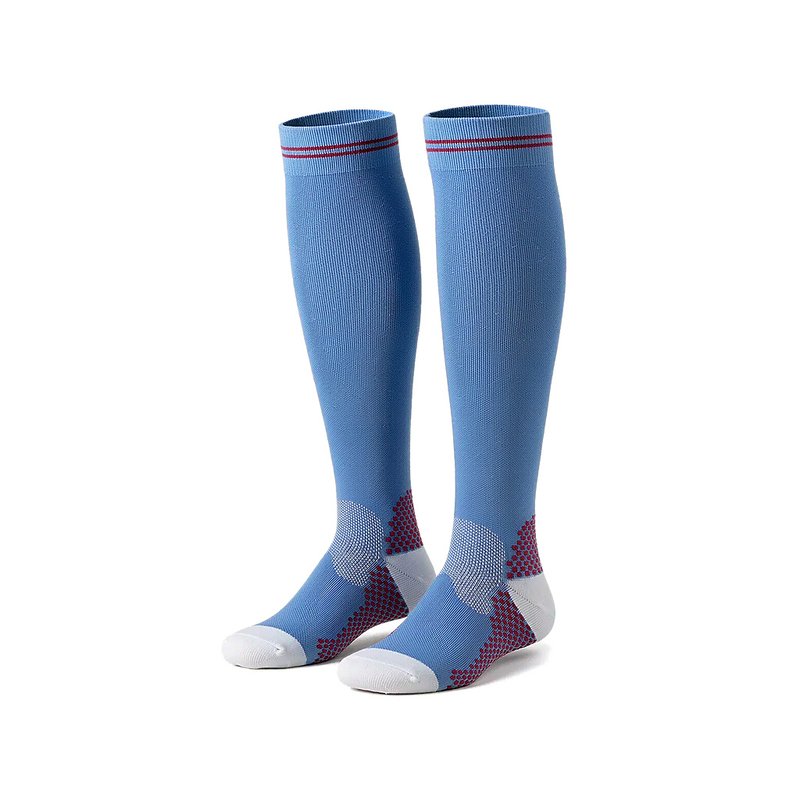
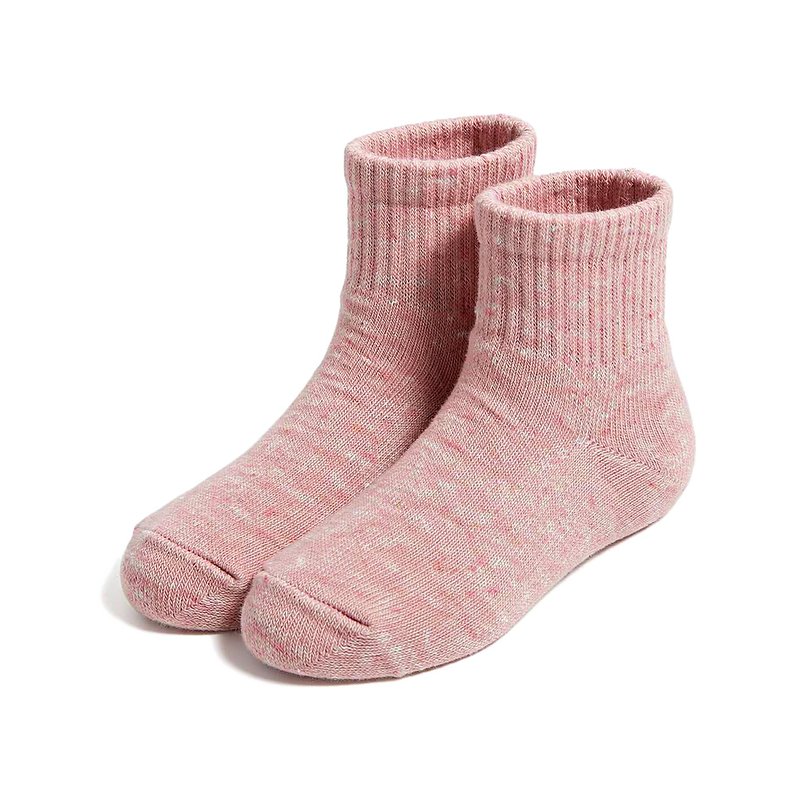
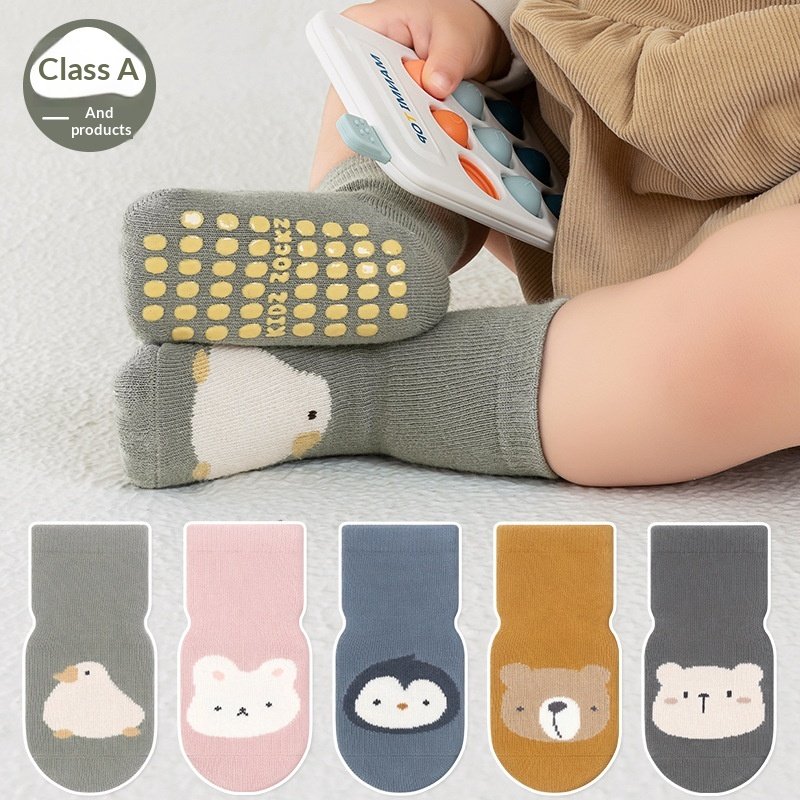
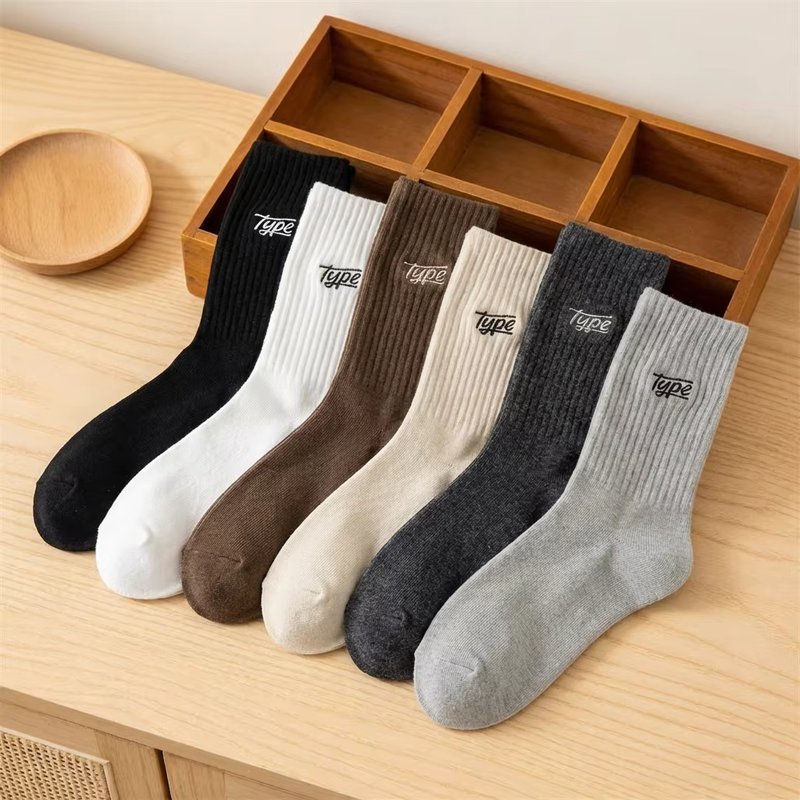
The baby style has a character face knitted as part of the sock; the other is a plain ground where a printed portrait panel would sit uncut. Each card opens the style's own page.
What a portrait buyer should not assume
A face is the one design here that can be withdrawn after it was approved, so the limits are stated before the file is opened.
- No face without a release. A portrait is not booked until written confirmation travels with the file, including from a guardian where the person is a minor.
- No screen colour. Skin is matched to a physical reference you send and then locked to a dye lot per order.
- No OEKO-TEX or GRS file under our name. If your market requires one, name it in the brief and the reply says what can and cannot be supplied.
- No likeness of someone who has not agreed. A recognisable person who has not consented is not a design the desk will run, whoever placed the order.
- No likeness from a knit. A knitted face reads as a mask; likeness needs a printed surface, and the offer says so before any sample is made.
- No price list. Panel, route and colour count decide the price, and that lands on the proforma invoice.
Whose permission, whether the eyes read, and what if the skin comes back wrong
Whose permission do I need to print a face?
The permission of the person whose face it is, or of their guardian where they are a minor, in writing, before the run is booked. Where the crop holds several people, every face inside it needs one, and where the buyer is not the person in the picture, the buyer is the one who has to produce it. The file is not the consent.
Will the eyes read at sock size?
That is what the sample is for, and it is the reason a face is never approved from a flat file. The eyes and the mouth are the only features that have to survive the process, so the crop is set to make them as large as the panel allows, and a printed surface holds more of them than a knit ever will.
What if the skin comes back wrong?
The reference is what protects you, so send one with the file rather than after the sample. Colour is matched to that swatch or printed proof and locked to a dye lot per order, and where the face is a real person, having them accept the proof is the cheapest correction available, because it happens before the run instead of after it.
Send the picture, the crop and the permission in one message
Attach the image with the permission that covers it, mark the part of the face that has to survive, name the style, the count and the grounds you want. The reply comes back within one working day with the crop the panel allows, the route proposed for that face, the colour reference the proof needs, and the sample timing behind it.
Michelle Zhang, Export sales manager, answers enquiries within one working day — sales@sockwholesalers.com, +86-13761030160 (WhatsApp same number).