 Sock Wholesalers
Page last updated: November 2, 2026
Socks for medical distributors are a range, a carton split and a file, in that order
A medical distributor does not buy a sock, it buys a range that has to sit on its own shelves and move out to its accounts: pressure band, lengths, size bands, cartons split for redistribution, and a document set that answers a tender before an order exists. The decisions below are the distribution ones. Nothing on this page is a device registration or a therapeutic claim, and the sock carries none.
The table underneath is the sheet a distributor quotation is built on. Published lines are printed elsewhere on this site and read the same here; the lines that follow your market — the range, the carton split, the pack wording and the tender answers — are settled on the proforma invoice.
Range width, carton split, and the file a tender opens with
Each card is one decision a distributor makes before a purchase order, with the printed figure or the published status behind it.
A range is a matrix, and every column is a run
The published band is 20–30 mmHg on the knee-length style, and crew, knee and thigh constructions are on the floor. Each length and each size band is its own style at 1,000 pairs, so a range of two lengths across several size bands is not one decision but several, and the first question a distributor should answer is which column of that matrix carries the volume.
Where it applies: Distributor ranges, own-label catalogue lines, a band sold both into retail and into clinic retail.
You decide: How many lengths and size bands the range carries, and which style leads it.
Evidence: the compression styles listed here — see the knee-length listing.
Cartons are built for your accounts, not for the crossing
Pairs per inner box, pairs per carton, carton dimensions and the carton marking are confirmed per style on the proforma invoice. A distributor selling into accounts that receive in inner boxes specifies that split, because a carton built for a container is not the carton a pharmacy can take; the packed pair count and the size split go onto the purchase order rather than into a later email.
Where it applies: Redistribution to accounts, DC receiving, pallet builds for a tender delivery.
You decide: The case pack, the size split per carton, and what the carton marking has to say.
Evidence: the packing lines offered here — see the packaging page.
The file is assembled with the brief, not after the award
Invoice and packing list travel with the goods, a certificate of origin is issued where the destination asks for one, and the factory entity's social-compliance certificates are published with their numbers and dates, so a procurement desk can verify them before a purchase order is raised. Send the questionnaire sections your tender actually needs and the reply states which can be answered and which cannot.
Where it applies: Public tenders, group purchasing for hospitals and care homes, a retail or wholesale compliance file.
You decide: Which documents and certificate copies your market needs, and which questions the file has to answer.
Evidence: the certificate numbers and dates published here — see the certificates section.
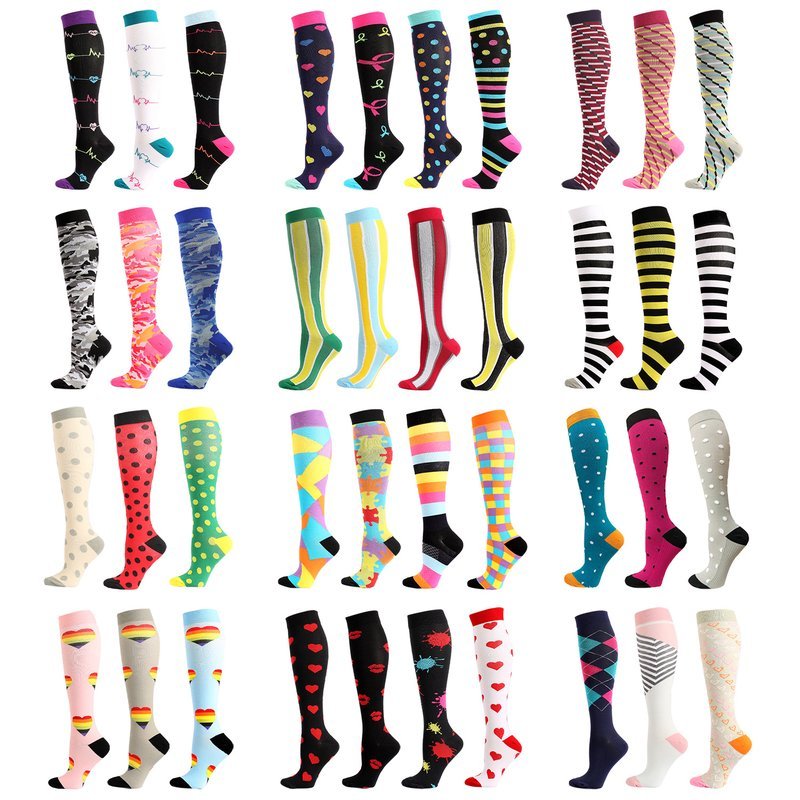
What a distributor can read off the site, and what its own market sets
Two kinds of line decide a distributor's margin and its legal position: figures that are printed, and statuses that never move. Both are separated here from the lines each market sets for itself.
Terms for a distributor range. Published lines are printed on this site; quoted lines are settled on your proforma invoice against the approved sample.
- Pressure band
- 20–30 mmHg
- Order size
- 1,000 pairs per style
- Sample
- 3–5 days
- Bulk lead time
- 20–30 days
| Term | What we publish | How your own order sets it | Where it is published |
|---|---|---|---|
| PublishedPressure band | 20–30 mmHg on the knee-length style. A band is not a device class. | Which band your market sells against, and the point it is measured at — ask whether yours is read at the ankle or at the calf. | The knee-length listing, the compression category and the pharmacy page. |
| PublishedDevice status | Not a medical device. No medical-device registration is held and no therapeutic claim is made on the sock or on the pack. | Nothing per order: the status is identical on every run and does not move with quantity, market or pack. | Compression listing, pharmacy page and buyer FAQ. |
| PublishedRun per length | 1,000 pairs per style for bulk orders, counted per style rather than per order. | A range across two lengths and several size bands is counted style by style: knee and thigh are two runs before the size split is considered. | Quote page, terms page and every product page. |
| QuotedRange matrix | Crew, knee and thigh constructions are on the floor; the published 20–30 mmHg band sits on the knee-length style. | How many lengths, size bands and colourways the range carries, and whether a class is quoted for the styles that publish none on their listing. | Range field on the specification sheet. |
| QuotedCase pack | Export cartons; header card, OPP bag and printed box are offered as packing options. | Pairs per inner box and per carton, the size split, and the carton marking for redistribution to your accounts. | Packing fields on the specification sheet and the purchase order. |
| PublishedDocuments | Invoice and packing list travel with the shipment, plus a certificate of origin where the destination asks for one. | The document set and certificate copies your tender or your customs broker names, and who receives the originals. | Terms page and the certificates section. |
| QuotedTender pack | No tender questionnaire is pre-filled here. The factory entity's certificates are published with numbers and dates, and a reply names what can and cannot be held for a market. | Which sections your questionnaire needs, the market it is filed in, and the wording your legal team will accept on device status. | Certificates section and the reply to your brief. |
| QuotedPack wording | The pack carries the band, the length, the size and the fibre; no therapeutic claim does. | The wording your market's rules allow on the header card and the box, including any wording you may not use. | Pack copy field on the specification sheet. |
The two rows that fix a distributor's exposure are device status and pack wording: one is the same on every run, the other is set by your market, and a range filed with the two confused is a refund rather than a reorder.
What a distributor keeps across a tender cycle
A distributor's account is won by a tender and topped up by call-offs, so what matters after the first shipment is what the range can repeat, what the paperwork has to keep saying, and what the account asks for the second time.
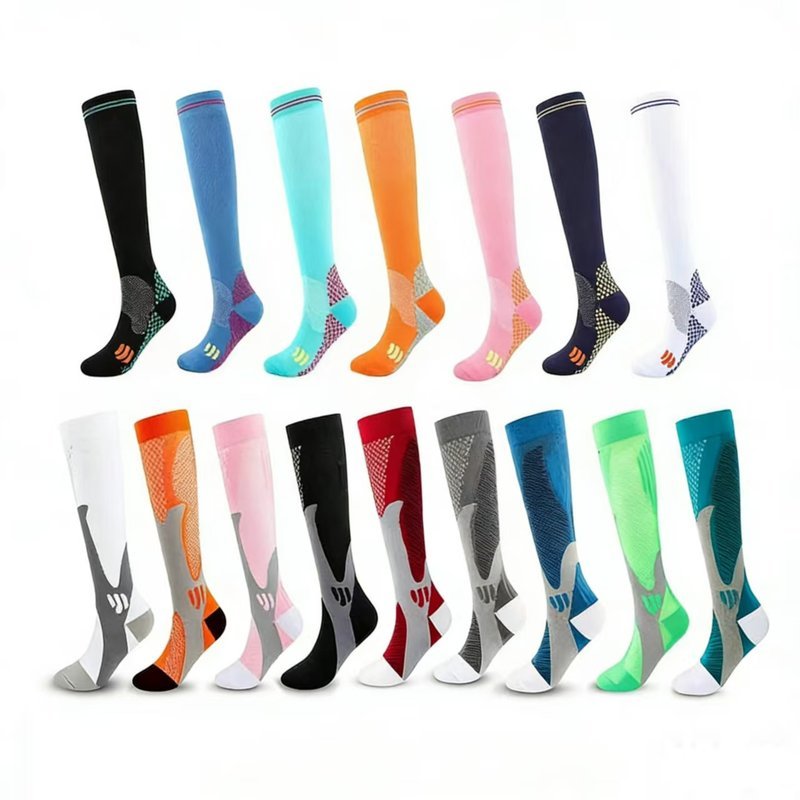
A repeat holds the band and the lot
Construction, yarn, colour and the approved sample are fixed by the first production run, and colour is bought to a dye lot locked per order. On a compression range that matters twice: the second delivery has to look like the first on a shelf, and the band has to be knitted to the same setting rather than to a remembered one.
Where it applies: Annual tenders, scheduled call-offs against a contract, a second delivery to the same account.
You decide: Whether the repeat is straight, and whether the same dye lot is still held before the quantity is committed.
Evidence: what a repeat carries over — see the reorder lead time page.
Call-offs are counted by style, not by contract
A contract may run for a year while each call-off still runs 1,000 pairs per style, so a distributor holding six styles against an account plans six runs rather than one bulk purchase. That is the line that decides how much stock sits in a warehouse between call-offs and how much is left at the end of a tender period.
Where it applies: Framework agreements, call-off schedules, a stock buffer held between deliveries.
You decide: The stock you hold between call-offs, and which styles are held deep against shallow ones.
Evidence: the per-style minimum as printed for buyers — see the wholesale terms page.
The paperwork has to read the same twice
Invoice, packing list and, where the destination asks for it, a certificate of origin travel with each shipment, and the certificate numbers and dates sit on this site so they can be checked without an email. A tender renewal usually resubmits last year's file: what changes on it is the invoice, not the certificate.
Where it applies: Tender renewal, customs entry, an account's compliance review.
You decide: Which parts of the file are resubmitted, and whether the destination now asks for an origin certificate.
Evidence: the certificate numbers and dates published here — see the certificates section.
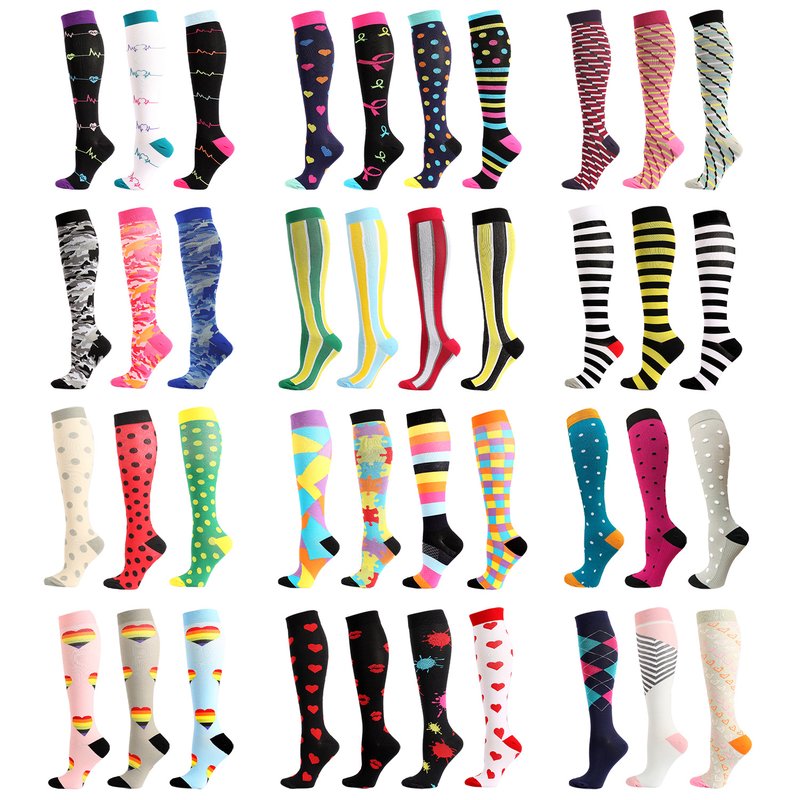
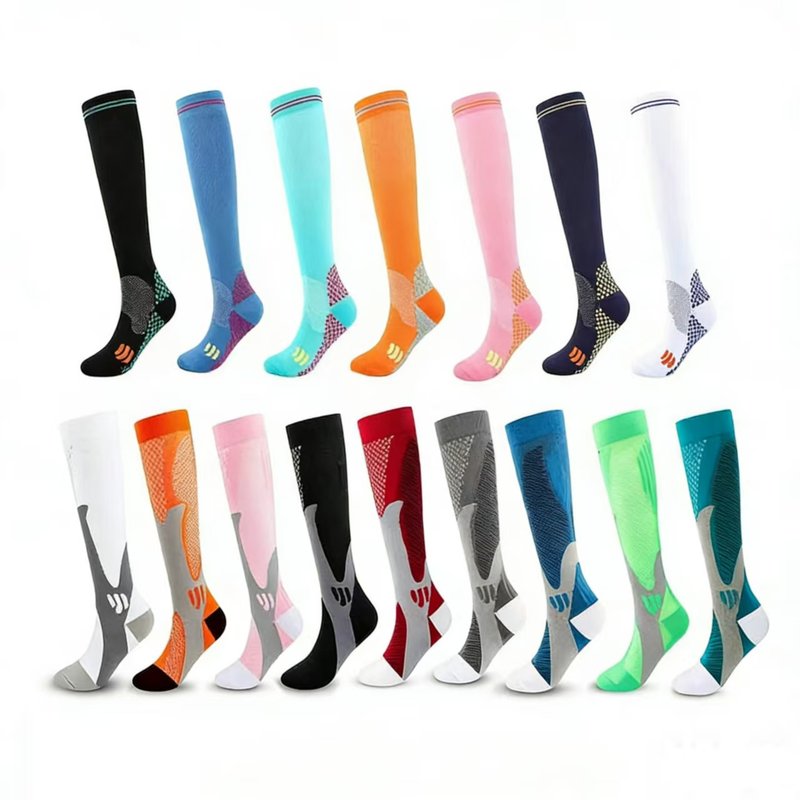
Two compression lengths a distributor range is built from
Both are current listings on this floor. The knee-length style carries the published band; the thigh-high carries none on its listing, so its class comes from the brief.
What a medical distributor should not assume
The boundary matters more in this category than in any other, so it is printed rather than discussed.
- No medical-device registration. Nothing here is registered as a device, no class is claimed under a compression standard, and no therapeutic claim goes on the sock or on the pack.
- No clinical claim and no wearer guidance. The applications listed on the compression styles are sport uses; what the pack says about use comes from your market and is confirmed per style.
- No tender answered on the page. A questionnaire is answered against your file; a pre-filled compliance pack is not something this site holds.
- No price list. Unit price follows range, colour count, pack and quantity onto the proforma invoice.
- No mixed-container promise. Every style in the range is its own run at 1,000 pairs; mixing lengths in one shipment does not mix the minimums.
- No OEKO-TEX or GRS file under our name. If a tender requires one, name it in the brief and the reply says plainly what can and cannot be supplied.
How wide a range, how the cartons are split, and what the file may say
How much of a range can one order carry?
As many styles as you can meet the minimum on, because 1,000 pairs per style is counted style by style. In this category a style is a length and a size band before it is a colourway, so the range a distributor plans is usually narrower than a catalogue suggests and deeper per line. Run the count on your own matrix rather than on the list.
Can the cartons be split for my accounts?
Yes, as a specification line: pairs per inner box, pairs per carton, carton dimensions and the marking are confirmed per style on the proforma invoice. Say how your accounts receive — inner box, case or pallet — and the packing is built from that, with the packed pair count and the size split on the purchase order.
What may the file say about the pressure band?
That it is knitted to a 20–30 mmHg band and that it is not a medical device. No class is claimed under a compression standard and no device registration is held, so a tender that asks for either comes back as a plain no rather than a hopeful yes. The pack wording your market allows is a quoted line, because it is decided per style.
The range, the carton split and the questionnaire sections you need
Send the range you intend to carry, the size bands behind it, how your accounts receive the goods, and the sections of the tender questionnaire you need answered. The reply comes back within one working day with the construction for each style, the per-style minimum in writing, the carton lines, the sample route and a plain statement of device status.
Michelle Zhang, Export sales manager, answers enquiries within one working day — sales@sockwholesalers.com, +86-13761030160 (WhatsApp same number).