 Sock Wholesalers
Page last updated: November 2, 2026
Custom knit socks begin as a drawing that has to survive a stitch grid
Custom knit socks are made from your artwork rather than picked off a range. What decides whether the sock comes back looking like the drawing is not the file itself but three translations: the stitch grid that file has to be cut down to, the number of colours the machine can carry in one round, and the finished length, which artwork cannot supply at all. This page follows one drawing through those three translations, says what the desk sends back before anything is knitted, and names the line where a drawing has to be re-cut rather than forced.
The table underneath splits the lines this site already prints from the lines your own drawing fixes. Published lines are the same figures printed on the terms pages; quoted lines are translations — stitch count, colour count, finished length — and each one lands on your proforma invoice against the artwork you approved.
Three translations decide what the knit actually looks like
Each card names one step between the file and the pair, and points at the page on this site where that step is already written out.
The stitch count comes back before the sample does
A flat drawing shows layout, not gauge. A cuff knits at a fixed stitch count, so fine detail drops out and block shapes survive. That is why an artwork file is answered with a stitch count and a layout check rather than a yes: expect the knitted result to read coarser than the file, and approve the coarser version, because bulk runs to what you signed.
Where it applies: Club and brand marks, lettering, tight geometric motifs, single-colour line work.
You decide: Whether the mark is simplified to the grid or redrawn for it, and who redraws it.
Evidence: the artwork stage published for buyers — see the design process page.
Colour count is decided per round, not per drawing
The number of colours one knitting round can carry is set by the machine that would run the order, and a cuff carries fewer than a full jacquard body. So the first question about a drawing is how many colours sit in a single round, not how many the drawing contains: a motif with a gradient is a different job from the same motif in flat blocks.
Where it applies: Brand patterns, colour-blocked basics, seasonal palettes.
You decide: The colour count per round, and which of those colours are a physical reference rather than a screen pick.
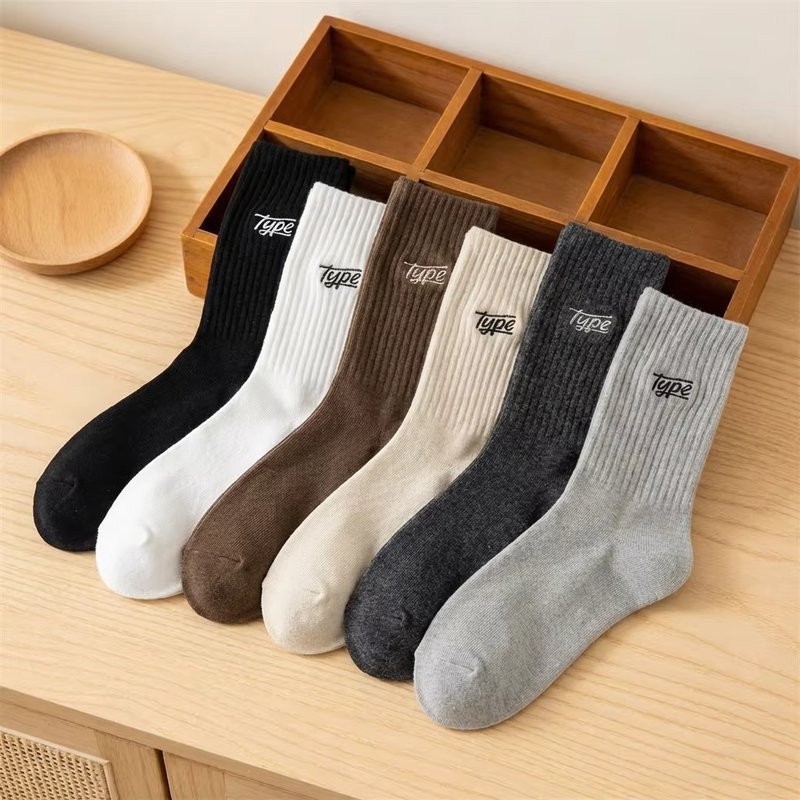
Evidence: one style already running in eight colourways — see the specification sheet for that style.
Length and boarding are drawn, not discovered
Boarding sets the finished shape, and no artwork corrects a length that was never specified. The foot length behind each size goes onto the brief in centimetres, with the size letters you sell sitting on top of it. A drawing that arrives without a length is returned with a question rather than knitted into a guess.
Where it applies: Fitted ranges, children’s sizing, multi-market size sets.
You decide: The size letters you sell and the foot length band behind each one.
Evidence: the size fields this site asks for — see the size chart page.
The lines your drawing passes, and where each one is settled
A drawing is not a specification. These are the lines the desk turns it into, split between what this site prints before you write and what only your own artwork can fix.
Terms for a custom knit order made from supplied artwork. Published lines are printed elsewhere on this site; quoted lines are settled on your proforma invoice against that artwork and the approved sample.
- Order size
- 1,000 pairs per style
- Sample
- 3–5 days
- Bulk lead time
- 20–30 days
- Size range
- XS–XXL on request
| Term | What we publish | How your own order sets it | Where it is published |
|---|---|---|---|
| PublishedSample | Typically 3–5 days after the brief and the artwork are confirmed; charged per style, credited against your first bulk order, courier on your side. | One charged sample knitted to your artwork, so the translation is checked in yarn rather than on a screen. | Sample policy page, quote page and buyer FAQ. |
| QuotedArtwork file | A vector file with the placement named. Two rounds of artwork changes are ordinary; a third usually means the brief moved. | The stitch count and layout check that come back with your file, and whether the drawing is re-cut to the grid before sampling. | Artwork stage of the design process guide. |
| QuotedPattern repeat | The pattern is knitted by the machine that makes the sock, so there is no print layer to crack and no applique to lift. | The repeat unit, where it starts and stops, and whether the motif wraps the sock or sits on one face. | Pattern field on the specification sheet. |
| QuotedColour count | Colour count follows the artwork and the machine that would run it, so no figure is printed here. | How many colours sit in one knitting round, and which of them are matched against a physical reference you send. | Yarn options page and the colour line on the sheet. |
| QuotedFinished length | Boarding sets the finished shape, and the shape is set from the brief. | The foot length band behind each size in centimetres, plus the size letters printed on the sock and the pack. | Size chart page and the size fields on the sheet. |
| QuotedDeviation from the drawing | Work this floor cannot hold is refused rather than passed to another factory. | Which parts of the drawing are held exactly and which are re-cut, named in writing before a sample is knitted. | The quotation, and the reply to the brief. |
| PublishedBulk lead time | Typically 20–30 days after deposit received and the sample approved. | Counted from your approval, style by style, so a range of drawings is several runs rather than one. | Quote page, terms page and buyer FAQ. |
| QuotedCosting | No price list is printed on this site. | The binding figure sits on the proforma invoice against the confirmed colour count and the quantity band. | Terms page and quote page. |
Two rows get skipped and both are cheap to answer with the drawing: the colour count and the finished length. They are expensive to discover on the sample, because the sample is the version bulk repeats.
What holds a drawing in place for the second run
The first run settles the translation. Everything after it is a repeat against the same file, which is the only reason a reorder can land on the same sock without a new drawing.
The signed sample is what bulk is judged against
The sample you sign and date is filed against your order number, and the production run is checked against that copy before the cartons close. It matters more on a knitted pattern than on a plain sock, because a motif that drifts is legible in a photograph and impossible to argue from memory.
Where it applies: Patterned ranges, seasonal repeats, club kit.
You decide: Which part of the sample is the part that must not move.
Evidence: the sample rule published here — see the sample policy page.
The file stays on your order, not in an inbox
The artwork you send stays yours and sits on your order file, so a reorder uses it without a resend and a silent re-cut cannot creep in. If you want the pattern withheld from any future run, that instruction is noted on the quotation, where it can be read later by somebody who was not in the email thread.
Where it applies: Repeat runs, licensed artwork, club crests.
You decide: Whether the file is held for repeats only, or withheld once your run is done.
Evidence: how a repeat reuses the file — see the reorder lead time page.
Colour is locked to a dye lot, per order
Colour is bought to a lot locked per order and matched to a physical reference you send: a swatch, a yarn card, or the sample you approved. A screen cannot be measured, so a shade named in an email is not a shade matched on yarn, and the second run is matched to the same reference and the same lot.
Where it applies: Multi-season ranges, retail basics, club colours.
You decide: Which physical reference the lot is matched against, and who holds it.
Evidence: the yarn and colour rules published here — see the yarn options page.
Two styles whose patterns arrived as someone else’s drawing
Neither of these came from a range here; both were knitted to artwork a buyer sent. Each card opens the style’s own page.
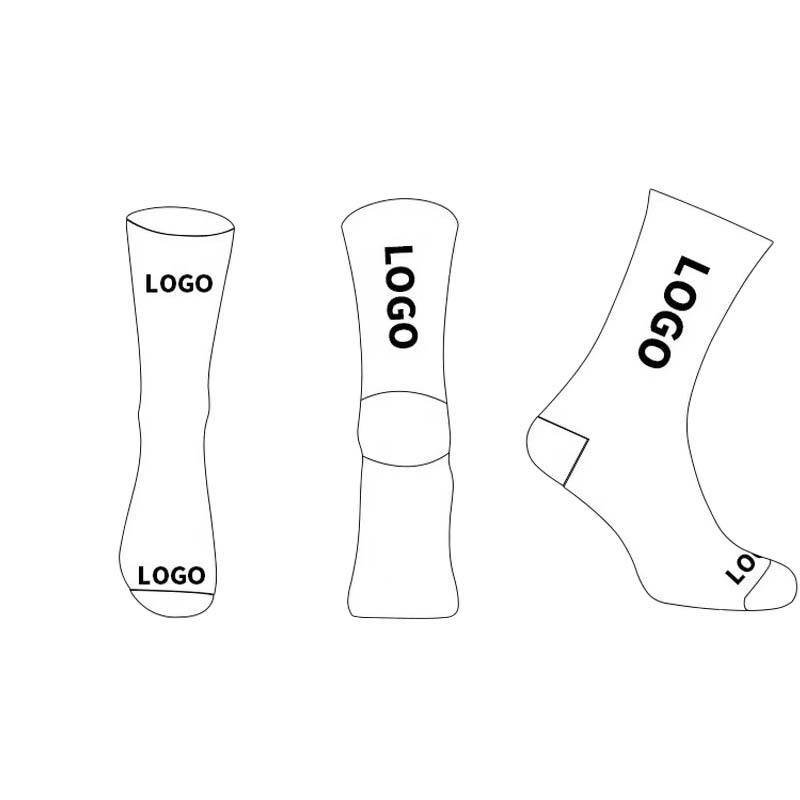
What a buyer sending artwork should not assume
Publishing the limit is cheaper for both sides than finding it on the sample.
- No price list. Costing follows the drawing, the colour count and the quantity onto the proforma invoice.
- No OEKO-TEX or GRS file under our name. If your market needs one, name it in the brief and the reply says what can and cannot be supplied.
- No screen colour. Colour is matched to a physical reference you send, then locked to a dye lot per order.
- No pixel-for-stitch promise. A stitch grid is coarser than a drawing, so fine detail is re-cut or dropped before sampling, not after.
- No design work from this desk. The artwork comes from you or your designer. The desk answers a file with a construction, not with a new drawing.
- No instant yes on a construction. Work outside what this floor holds is refused rather than passed to another factory.
What the file has to contain, what it loses, and what proves it
Is a finished drawing enough to start?
A file starts the conversation, but the brief around it is what gets quoted: the placement, the end use, the size band and the quantity. A photograph of a sock you already own fills more of that in than any description, because it settles construction in one look.
What will the knit not hold?
Fine line work, gradients and text below a readable stitch size are the usual casualties. The desk returns a stitch count and a layout check for that reason: the honest answer names what the grid holds before a sample is knitted, so a re-cut costs an email rather than a run.
Who owns the drawing afterwards?
You do. The file stays yours and sits on your order file, so a reorder uses it without a resend. The construction stays with this floor, and if the pattern has to be withheld from any future run that goes on the quotation in writing.
Send the drawing, the placement and the length
Attach the vector file with the placement named, say which size band and foot length you sell against, and name the colour count in one round if you know it. The reply comes back within one working day with the stitch count, the construction for each line, the per-style minimum in writing and the sample route.
Michelle Zhang, Export sales manager, answers enquiries within one working day — sales@sockwholesalers.com, +86-13761030160 (WhatsApp same number).