 Sock Wholesalers
Page last updated: November 2, 2026
Socks for sports brands are a calendar problem before they are a design problem
A sports brand does not order socks once; it reorders against a season, in colours the kit has already set and before a date that cannot move. So the decisions are the number of colourways a season carries, the physical reference each colour is matched to, the point at which the order has to be placed to arrive ahead of the first fixture, and what a mid-season top-up does to the sheet underneath. This page treats all four as counts and dates rather than as styling.
The table underneath is the sheet a season is planned on. Published lines are printed elsewhere on this site and read the same here; quoted lines move with your colourways and your calendar, and land on the proforma invoice rather than on a page.
Colourway count, colour reference, and the date the box has to land
Each card is one decision a sports brand makes once a season, with the printed figure that sits behind it.
A colourway is a style, and a style is a run
The floor is 1,000 pairs per style and it is counted per style rather than per order, so six team colours of one shape is six runs, six samples and six dye lots. That arithmetic is what decides how wide a season can go before a designer is asked for more, and it is worth running against a colour card before any artwork exists.
Where it applies: Season colourways, kit drops, team colour editions, a retail range built on one shape.
You decide: How many colourways the season carries, and which one the range rests on.
Evidence: the per-style minimum as printed for buyers — see the wholesale terms page.
A team colour is matched to something that can be measured
Colour is bought to a dye lot locked per order and matched to a physical reference — a shirt, a yarn card, a swatch or an approved sample. A screen is not a reference, which is why a kit colour sent as a code comes back with a question rather than a match, and why the lot is locked so the second drop lands on the same colour as the first rather than near it.
Where it applies: Club and franchise colours, licensed kit colours, a brand palette carried across two seasons.
You decide: Which physical reference each colour is matched to, and whether the lot is held for the next drop.
Evidence: how colour is bought here — see the yarn options page.
The season date is the only fixed point in the order
Sampling runs 3–5 days after the brief and artwork, bulk runs 20–30 days after the deposit and the sample approval, and then the freight leg: approx. 25–40 days by sea, 5–10 days by air, 3–7 days by express. Added up, a pre-season delivery is an order placed well before pre-season, not a request for speed in the month the goods are needed.
Where it applies: Pre-season delivery, kit launches, a retail drop timed to a fixture list.
You decide: Which freight leg the date can carry, and where in the chain the slack sits.
Evidence: the freight windows published here — see the shipping volume page.
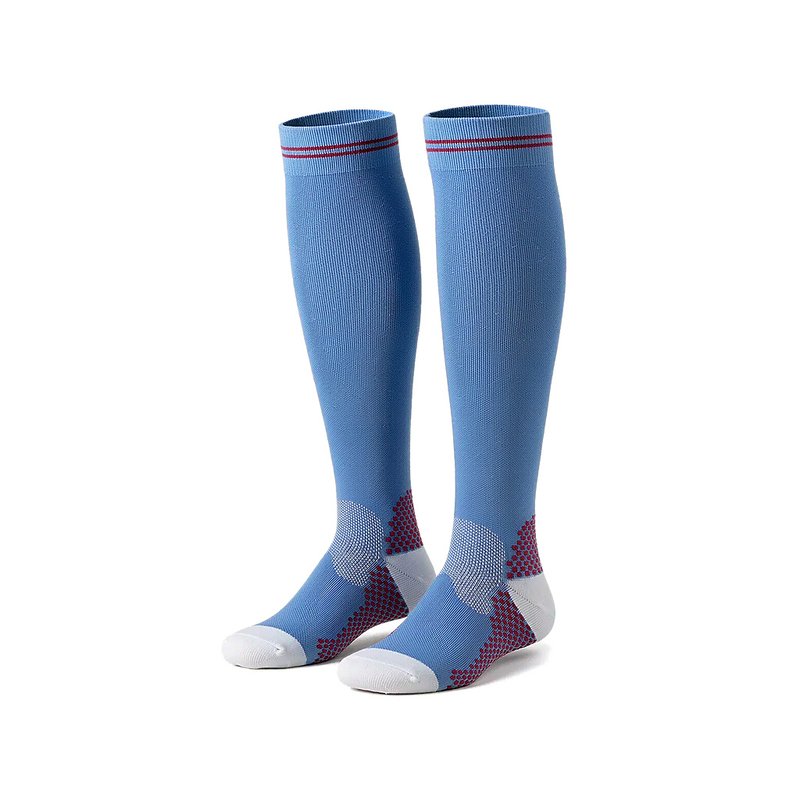
What a sports brand can read off the site, and what its own season sets
The figures that do not move are printed here; the ones that follow your colourways and your dates land on the proforma invoice. The split matters, because a season is usually lost on a line nobody thought to ask about.
Terms for a season of sports socks. Published lines are printed on this site; quoted lines are settled on your proforma invoice against the approved sample.
- Order size
- 1,000 pairs per style
- Sample
- 3–5 days
- Bulk lead time
- 20–30 days
- Sea freight
- 25–40 days
| Term | What we publish | How your own order sets it | Where it is published |
|---|---|---|---|
| PublishedOrder size per colourway | 1,000 pairs per style for bulk orders. | Counted per style, not per order: two colourways of one shape are two runs, two samples and two dye lots, and that is the arithmetic a season is built on. | Quote page, terms page and every product page. |
| QuotedTeam colour | Colour is bought to a dye lot locked per order and matched to a physical reference; there is no screen match. | The shirt, yarn card, swatch or approved sample each colour is matched to, and the point in the season the lot is locked. | Yarn options page and the colour matching line on the sheet. |
| QuotedColour count per round | The number of colours in a knitted pattern is a costing line, and no price list is printed on this site. | How many colours a stripe, a panel or a crest carries, and whether fine detail goes to embroidery instead of a knit. | Costing line on the proforma invoice. |
| PublishedSample timing | Typically 3–5 days after the brief and artwork; charged per style, credited against your first bulk order; you cover the courier. | One charged sample per style, and a colourway change is a new sample round rather than a repeat of the last one. | Sample policy page, quote page and buyer FAQ. |
| PublishedDelivery before the season | Bulk typically 20–30 days after deposit and sample approval; transit approx. 25–40 days sea, 5–10 days air, 3–7 days express. | Which date the season is back-scheduled from — the first fixture, the kit launch or the retail drop — and which leg fits it. | Terms page and buyer FAQ. |
| QuotedIn-season top-up | A repeat against an approved sample needs no new brief; whether the dye lot is still held is confirmed per order. | Whether a mid-season top-up is a straight repeat or carries a colour change, and how far ahead of the remaining fixtures it is raised. | Reorders page and the proforma invoice. |
| QuotedSize run per colourway | Made to your chart, typically XS–XXL on request. | How the 1,000 pairs split across sizes for a retail sock against a kit sock, and whether youth sizes sit in the same run. | Size chart page and the specification sheet. |
| QuotedCrest and sponsor marks | Logo placement on our own sheets defaults to the rib cuff, with the body and the sole available for a second mark. | Crest on the cuff, sponsor on the body or the sole, and knitted against embroidered — the artwork file usually decides which is honest. | Logo placement and decoration fields on the specification sheet. |
Two rows decide a season more than the rest: the colour count per round and the delivery line. One is where a design becomes a costing, the other is where a launch date becomes possible or not, and neither has a published answer, so both are worth having in writing before artwork is signed off.
What carries into the next drop, and what a colour change costs you
A second season is a repeat of a sheet rather than a new brief, until one line changes. The cards below are the three lines that usually do.
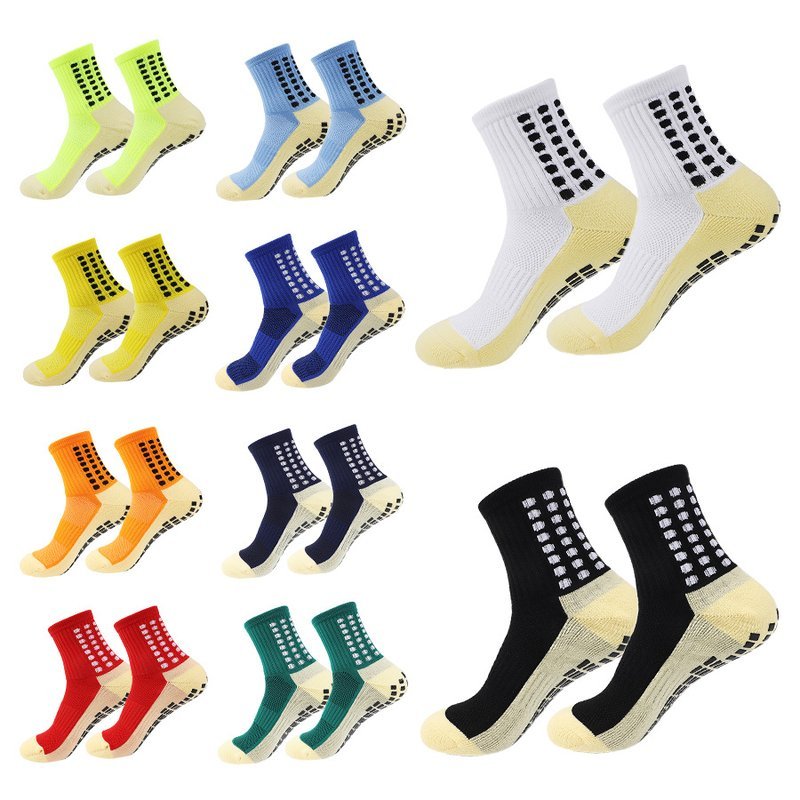
A repeat season starts on the locked sheet
Construction, yarn, colour and the approved sample are fixed by the first production run, so a second drop of the same sock needs no new brief and no new artwork round. The clock then starts at the deposit rather than at an approval, and that difference is most of the time saved between two seasons of the same sock.
Where it applies: Annual kit programmes, a second drop of a proven sock, scheduled call-offs across a season.
You decide: Whether the repeat is straight, and whether the same dye lot is still held.
Evidence: what a repeat keeps — see the reorder lead time page.
A new colourway is the expensive kind of reorder
A colour change carries the specification and the sample shape over, but adds a dye lot and an approval, so it can take longer than the first order did. Ask for a colourway addition on the terms of a new style rather than a repeat, and put it in the calendar where a slip cannot reach the fixture it was meant for.
Where it applies: Mid-season colour additions, a licensed colour refresh, a retail exclusive.
You decide: Which colourways are repeats and which are additions, and the date each one can absorb.
Evidence: why a colour is a dye lot — see the yarn options page.
A mid-season top-up is a calendar decision, not a volume one
A top-up runs on the standing terms — typically 20–30 days after deposit and approval — and it still counts per style, so a request for one colour mid-season is a full run of that colour. Brands that expect a top-up put one colourway aside at the start of the season rather than asking for a split once the fixture list is already running.
Where it applies: League fixtures, a sales spike on one colourway, a replacement for a delayed drop.
You decide: The one colourway held back, and the fixture date the top-up has to beat.
Evidence: the windows a top-up runs on — see the wholesale terms page.
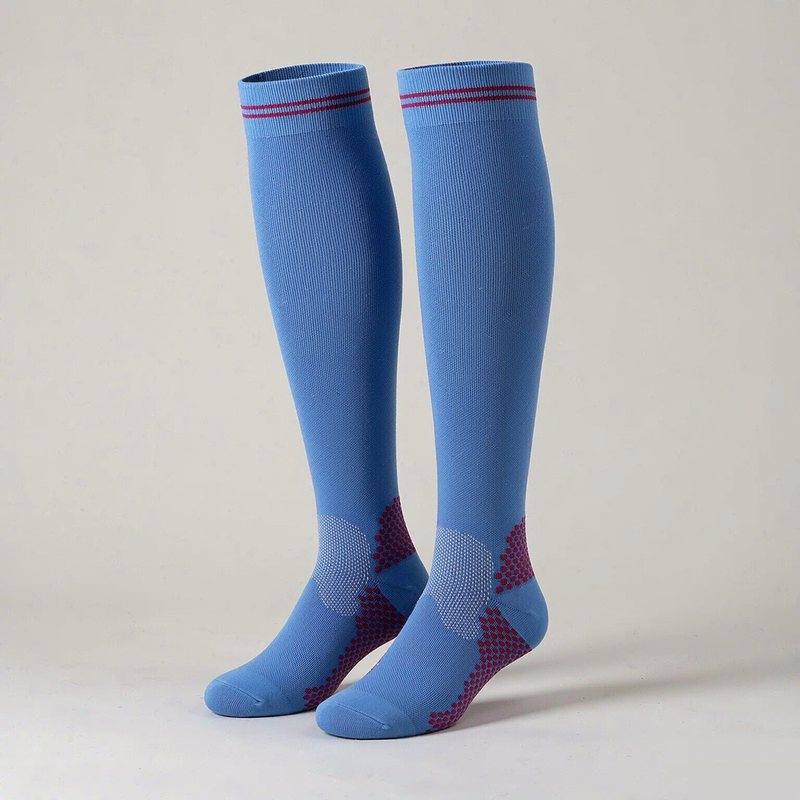
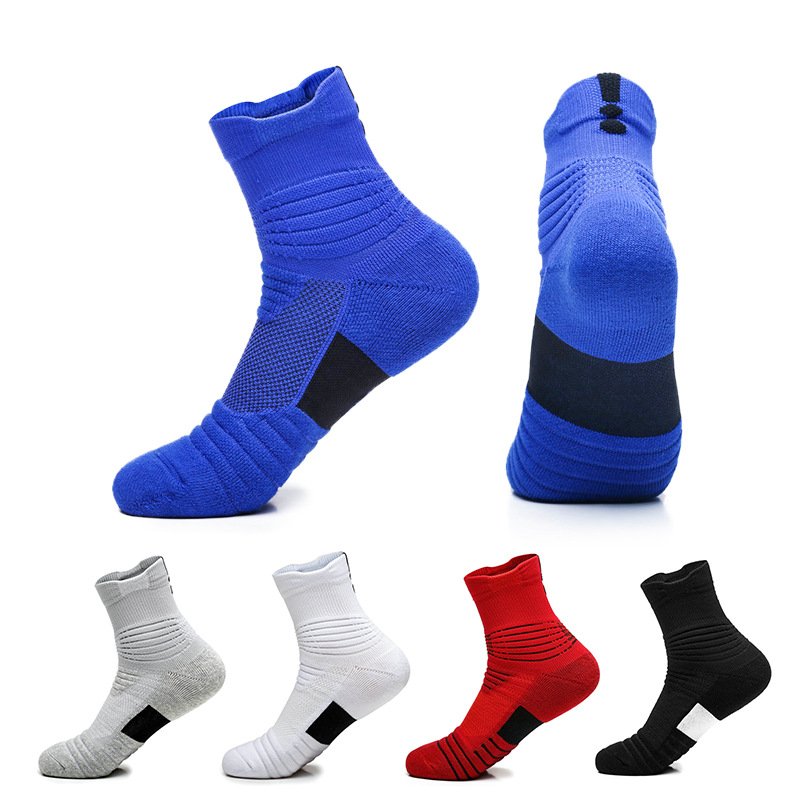
Two kit shapes already running for sports customers
Both are current listings on this floor and both were knitted to somebody's colours. Each card opens the style's own page.
What a sports brand should not assume
Publishing the limit is cheaper for both sides than finding it out during a kit launch.
- No screen colour match. A colour is matched to a physical reference and locked to a dye lot; a photograph of the kit cannot be measured.
- No reserved capacity. A season date is protected by ordering early, not by asking for priority once the floor already has a queue.
- No medical or recovery claim. The compression line here is knitted to a 20–30 mmHg band and is not a registered medical device, so it carries no therapeutic claim on the pack.
- No price list. Costing follows colour count, quantity and pack onto the proforma invoice.
- No kit assembled here. Socks only: the shirt, the short and the rest of the kit stay with whoever makes them.
- No OEKO-TEX or GRS file under our name. If a licence or a retailer needs one, name it in the brief and the reply says what can and cannot be supplied.
How many colours, matched to what, and by which date
How many colourways can one season carry?
As many as you can meet the per-style minimum on, because the floor is 1,000 pairs per style and a colourway counts as its own style. That is the number to run against a colour card before a designer is briefed: five colourways of one shape is five runs, five samples and five charge lines, however small the change between them looks.
What do you need to match a club colour?
A physical reference: a shirt, a swatch, a yarn card or an approved sample. None of them is read off a screen. Colour is then bought to a dye lot locked per order, so the second drop matches the first rather than approximating it, and a lot that has run out is the one change that shows in the finished sock.
When does the order have to be placed?
Work backwards from the date the box has to land: sampling 3–5 days after the brief and artwork, bulk 20–30 days after deposit and sample approval, then approx. 25–40 days by sea or 5–10 days by air. Express, at 3–7 days, is the leg for a top-up rather than for a season's stock.
Colourways, references, and the date the first box has to land
List the colourways the season carries, send a physical reference for each one, and give the date the first box has to be at your warehouse or your distributor. The reply comes back within one working day with the construction, the per-style minimum in writing, the sample route and the freight leg that fits the date.
Michelle Zhang, Export sales manager, answers enquiries within one working day — sales@sockwholesalers.com, +86-13761030160 (WhatsApp same number).