 Sock Wholesalers
Page last updated: November 2, 2026
Socks for startups means one style, one sample, and a decision about what comes second
A first order is a test of a product rather than a volume play, so the useful questions are narrow ones: how little can be committed to a single style, what one sample does and does not prove, what the pack adds before anything sells, and the point at which a second style stops being risk and starts being a range. Every answer below is a figure printed elsewhere on this site or a line your own quotation settles. None of it is a launch promise.
The table underneath is the sheet a first quotation is built on. Lines marked published are printed elsewhere on this site and read the same here; quoted lines move with your specification and are settled on the proforma invoice rather than on a web page.
Three decisions decide whether a first run is a test or a commitment
Each card is one decision a founder makes before the first deposit, with the printed figure that sits behind it.
The first order is one style, not a range
The floor is 1,000 pairs per style and it is counted per style rather than per order, so a launch of three styles is three runs, three samples and three deposit lines. A new brand is usually better served by putting the whole minimum behind the one construction it can defend, selling that, and adding a second style on evidence rather than on hope.
Where it applies: First launches, single-product storefronts, a founder testing one construction.
You decide: Whether the launch is one style or two, because the second one doubles the sample cost and the deposit before anything has sold.
Evidence: the minimum as printed for buyers — see the wholesale terms page.
The sample is the cheapest part of the risk
A charged physical sample is knitted in 3–5 days once the brief and artwork are confirmed, the fee is credited against the first bulk order, and the courier is yours. That is a small price for holding the sock before a deposit, and the sample is also the object the whole run is measured against, so the copy you sign is worth keeping.
Where it applies: First runs, a construction rebuilt from a previous supplier, artwork that has never been knitted.
You decide: How many samples you want before the run, and which one signs off the bulk.
Evidence: the sampling terms and the credit — see the sample policy page.
The pack decides what the first run can sell for
An export carton with a plain OPP bag is the bare route; a header card or a printed box adds a print bill that a first run has to carry before a single pair sells. All three are offered as packing options and confirmed per style, so a founder can start plain and put the printed box on the second run without changing the sock.
Where it applies: Retail-ready packs, marketplace photography, gifting for a launch.
You decide: Which of the three goes on run one, and what the pack has to say once it is printed.
Evidence: the packing lines offered here — see the packaging page.
What a first order publishes, and what only your quotation can settle
A founder reads a supplier for two things: a figure that is printed and checkable, and a line the factory will put in writing before money moves. This table separates the two instead of blurring them into one paragraph.
Terms for a first order. Published lines are printed on this site; quoted lines are settled on your proforma invoice against the approved sample.
- Order size
- 1,000 pairs per style
- Sample
- 3–5 days
- Bulk lead time
- 20–30 days
- Air freight
- 5–10 days
| Term | What we publish | How your own order sets it | Where it is published |
|---|---|---|---|
| PublishedFirst run | 1,000 pairs per style for bulk orders. | Counted per style, not per order: a founder launching one sock puts the whole minimum behind that one style, and a second style is a second run. | Quote page, terms page and every product page. |
| PublishedTrial sample | Typically 3–5 days after the brief and artwork; charged per style, credited against your first bulk order; you cover the courier. | One charged physical sample per style, knitted to your artwork and your size chart, in your hand before the deposit leaves. | Sample policy page, quote page and buyer FAQ. |
| QuotedSecond style | No rule is published on when a range should widen, and the minimum stays 1,000 pairs per style whether it is your first style or your fifth. | Whether the second style is a colourway of the first or a different construction, and whether it waits for the first run's sell-through. | Settled on the specification sheet and the proforma invoice. |
| QuotedDepth against width | No price list is printed here; the unit price moves with quantity and with the colour count per round. | How the 1,000 pairs split across sizes and colourways. One colour across a full size run is a different costing from four colours at a quarter of the depth. | Costing line on the proforma invoice. |
| QuotedPack for run one | Export cartons; header card, OPP bag and printed box are offered as packing options. | Which of the three the first run carries, and whether the printed box is deferred to the repeat. | Packing fields on the specification sheet. |
| PublishedBulk lead time | Typically 20–30 days after deposit received and sample approved. | Counted from the deposit and the approval, so the production money is committed for the whole window before anything ships. | Quote page, terms page and buyer FAQ. |
| QuotedDeposit | A deposit is taken before bulk starts; the split is stated on the proforma invoice and not on this site. | How much goes down with the order, and when the balance falls due against the documents. | Payment terms on the proforma invoice. |
| QuotedFreight leg | Approx. 25–40 days sea, 5–10 days air, 3–7 days express, depending on destination. | Which leg a first run can afford, and whether a launch date moves for it or the quantity comes down instead. | Terms page and the shipping volume page. |
Two lines are worth pushing on before a first order: the second style and the depth against width. Both are decided per order, neither has a published answer, and between them they decide whether a launch stays a test or turns into a range before anything has sold.
What a founder should watch in the weeks after the first run lands
The first run's real output is not the cartons, it is the sheet they were knitted against. Here is what carries into a second order and what has to be decided again from scratch.
A reorder runs on the sheet the first run locked
Construction, yarn, colour and the approved sample are fixed by the first production run, and colour is bought to a dye lot locked per order. A second order is a repeat against that sheet, which is why it needs no new brief and no new artwork round, and why the second box matches the photographs taken of the first.
Where it applies: A style that sold and gets topped up, a season extension, a second drop of the same sock.
You decide: Whether the repeat is a straight run or carries a colour change, because a colour change adds a dye lot and an approval.
Evidence: what carries over on a repeat — see the reorder lead time page.
The moment to add a second style is a sell-through fact
A second style costs its own sample, its own minimum and its own dye lot, so the honest trigger is evidence from the first one: a size that reorders, a colour that moves, a customer asking for a length you do not carry. Adding it before that evidence means two deposits sitting in stock at once, with nothing yet proving the second sock.
Where it applies: Range extension after a first season, a second construction on a proven customer base.
You decide: The evidence you want first, and whether the second style is a new construction or a colourway.
Evidence: the custom against stock trade on this site — see the custom versus stock page.
A costing moves when the brief moves
No price ladder is printed on this site, so the figure worth negotiating is the one costed for your quantity, your colour count and your pack. That is also why a founder can move the price without changing the sock: fewer colours, one size run, a plain bag instead of a printed box. Ask for the costing against two versions of the same brief and the trade becomes visible in writing.
Where it applies: A first run that has to fit a fixed budget, a second run negotiated against the first.
You decide: Which variable is cheapest to move: quantity, colour count, or the pack.
Evidence: the terms on negotiating a price — see the pricing page.
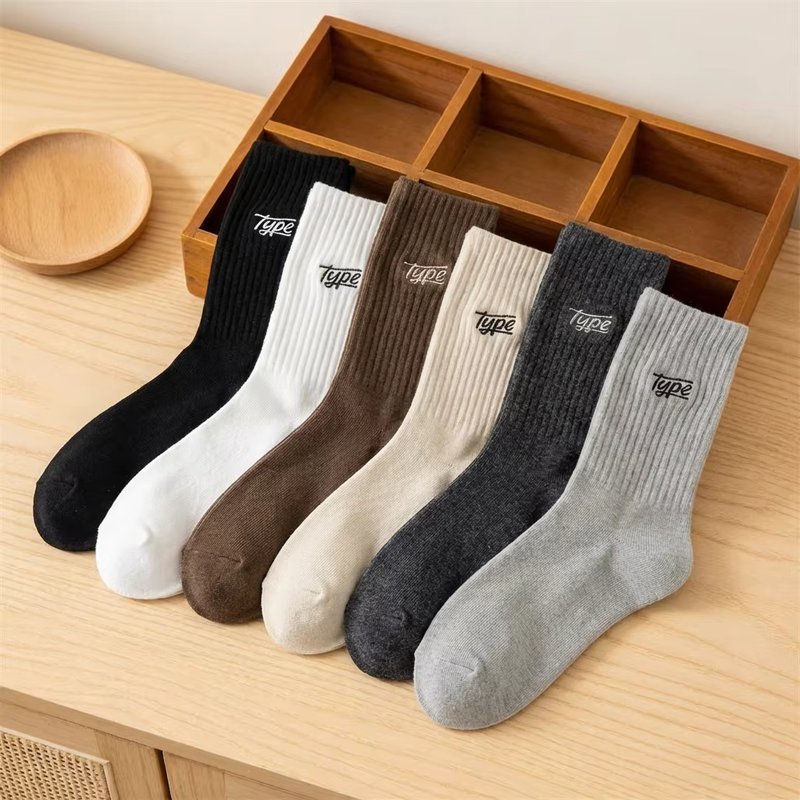
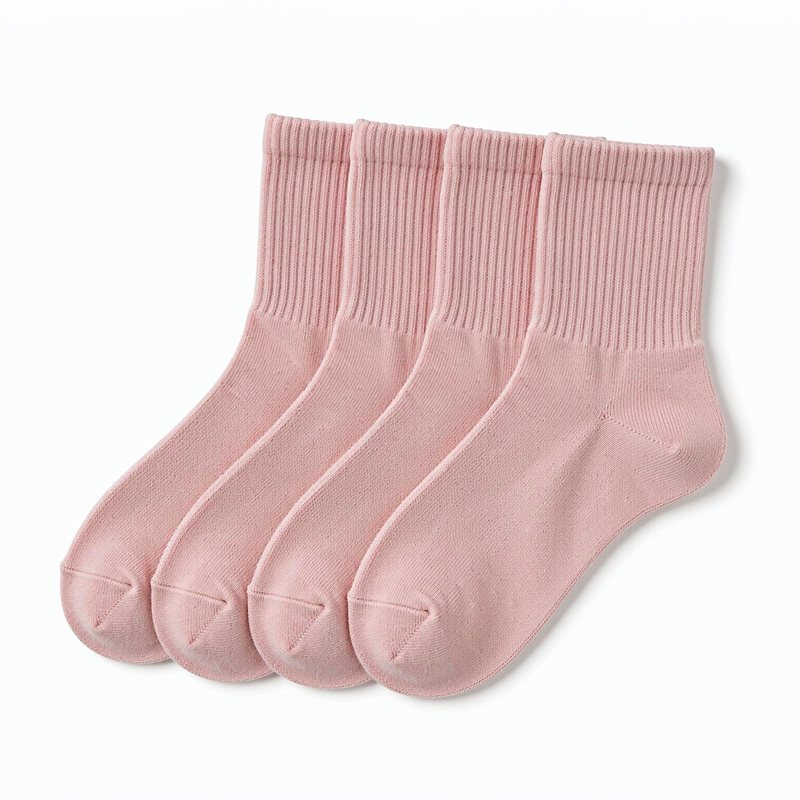
Two plain crew constructions a first brand can build on
Both are current listings on this floor. Neither needs new artwork to start, and both sit in the categories the floor already knits.
What a first-time buyer should not assume
Publishing the limit is cheaper for both sides than finding it after the deposit is paid.
- No stock to buy from. Nothing is knitted before your brief, so there is no shelf of finished pairs to top up from between runs.
- No price list. The unit price follows your quantity, colour count and pack onto the proforma invoice.
- No OEKO-TEX or GRS file under our name. If your market needs one, name it in the brief and the reply says what can and cannot be supplied.
- No launch calendar. Sample and production windows are published; the date your shop or marketplace needs is set against them, not by them.
- No promise under the minimum. A quantity below 1,000 pairs per style goes to the desk as a question and comes back with a costing, not a yes.
- No screen colour. Colour is matched to a physical reference you send — a swatch, a yarn card or an approved sample — then locked to a dye lot.
How little can I commit, what does it take, and how long before anything lands
Can I start below the minimum?
The floor is 1,000 pairs per style, and it is the figure this site prints everywhere rather than one it hides behind an enquiry form. Under that line the standing route is a charged sample per style, typically 3–5 days after the brief and artwork, with the fee credited against the first bulk order. A lower quantity is worth asking as a question; it is not a published yes.
What does the first order cost me before anything sells?
A sample fee per style, then a deposit, then freight, with the unit price settled on the proforma invoice against your quantity, colour count and pack. The two variables a founder controls most cheaply are the number of styles and the number of colours per round: both add a run, a sample and a costing line.
When does a first run land?
Sampling typically takes 3–5 days after the brief and artwork are confirmed, bulk runs 20–30 days after the deposit is received and the sample is approved, and the freight leg sits on top: approx. 25–40 days by sea, 5–10 days by air, 3–7 days by express. A launch date is a date to work backwards from, not one to ask for at the end.
One style, one artwork file, one size chart
Name the one construction you want to launch, attach the artwork for the sock and the pack, and send the size chart you intend to sell against. The reply comes back within one working day with the construction for that style, the per-style minimum in writing, the sample route, the packing lines and the freight legs.
Michelle Zhang, Export sales manager, answers enquiries within one working day — sales@sockwholesalers.com, +86-13761030160 (WhatsApp same number).