 Sock Wholesalers
Page last updated: November 2, 2026
A private label sock programme is a labelling decision before it is a knitting one
On a private label programme the sock is the easy half: jacquard, terry and grip soles are all knitted here. The half that decides whether the goods reach a shelf as yours is what goes on the sock, what goes on the label, what goes on the box, and who signs the sample that fixes all three. This page sets out that half line by line.
The table underneath is the sheet our quotations are built on. Published lines are printed elsewhere on this site and are the same figures here; quoted lines move with your specification and are settled on the proforma invoice, not on a web page.
Three lines decide whether the label is yours or ours
Each card names one decision, what the floor holds for it, and the page on this site where the claim is already printed.
The cuff is the default place for your mark
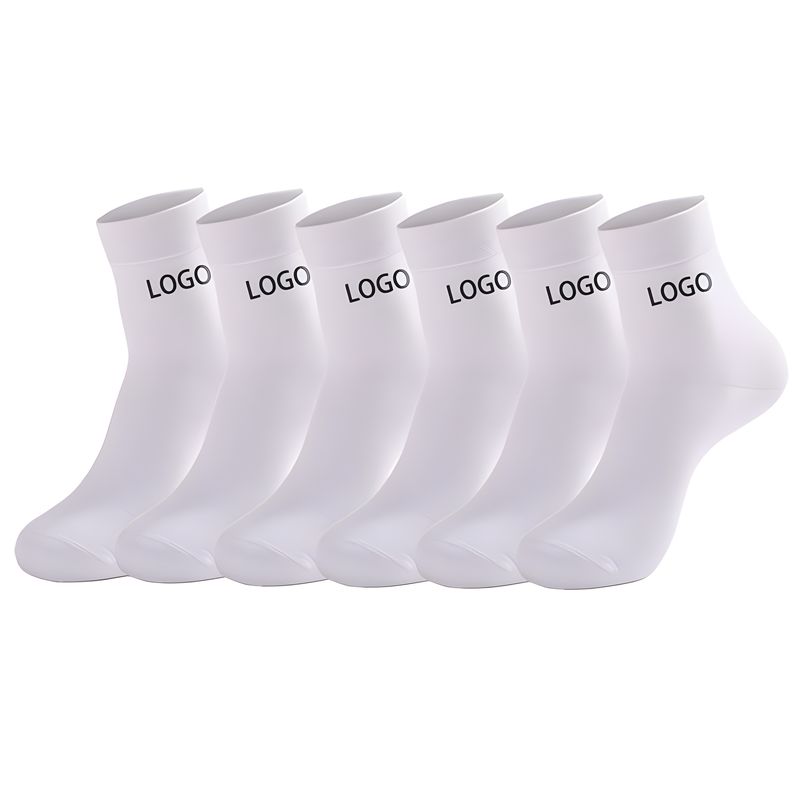
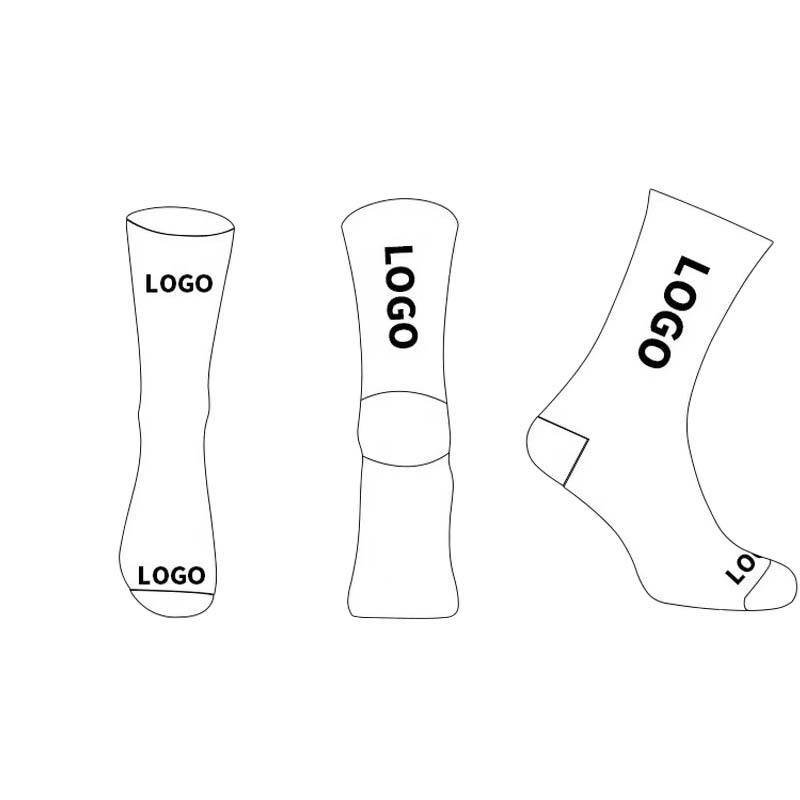
Logo placement on our own specification sheets is the rib cuff, with the body and the sole kept available for a second mark. A cuff mark is knitted in on the machine that makes the sock, so it is part of the garment rather than a print that lifts after ten washes.
Where it applies: Brand and club cuff marks, rib-cuff logos, retail basics with a discreet mark.
You decide: The placement, the size, and whether the mark is knitted in or embroidered on.
Evidence: a cuff logo band knitted into the sock — see the specification sheet for that style.
Jacquard is knitted, never applied
Patterns are knitted by the same machine that makes the sock. There is no print layer to crack and no applique to lift, which is why a brand pattern belongs in the jacquard file rather than in a decoration quote. Colour count is the line that moves the price, so the number of colours per round is the first thing we ask for.
Where it applies: Brand patterns, repeating motifs, colour-blocked retail basics.
You decide: The colour count, where the repeat sits, and whether the pattern wraps the sock or stops at the cuff.
Evidence: jacquard as the pattern in the basketball crew's sheet — see the specification sheet for that style.
Labels, header card and box are part of the brief
Size and care label artwork, the header card and the printed box are specified with the sock rather than sourced separately, because the pack is where a brand's resale price is defended. Each element is confirmed on the proforma invoice as a packing line, so nothing about the presentation of your product is left to a verbal understanding.
Where it applies: Retail-ready packs, gifting, marketplace listings that photograph the pack.
You decide: Which elements carry your mark: the sock, the label, the header card, the box.
Evidence: the packing options published for this site — see the packaging page.
Published figures, and the lines your quotation settles
A private label buyer reads a factory two ways: what is printed and checkable, and what the factory will put in writing. This table separates the two instead of blurring them into one paragraph.
Terms for a private label sock programme. Published lines are printed on this site; quoted lines are settled on your proforma invoice against the approved sample.
- Order size
- 1,000 pairs per style
- Sample
- 3–5 days
- Bulk lead time
- 20–30 days
- Shipping transit
- 25–40 days
| Term | What we publish | How your own order sets it | Where it is published |
|---|---|---|---|
| PublishedOrder size | 1,000 pairs per style for bulk orders. | Counted per style, not per order: a two-colourway launch is two runs. | Quote page, terms page and every product page. |
| PublishedSample | Typically 3–5 days after the brief and artwork; charged per style, credited against your first bulk order; you cover the courier. | One charged physical sample per style, knitted to your approved artwork and to your size chart. | Sample policy page, quote page and buyer FAQ. |
| QuotedCuff mark | Cuff placement is what our own sheets specify; the body and sole are available for a second mark. | Mark size, colour count, and knitted-in versus embroidery, all set from your artwork files. | Logo placement field on the specification sheet. |
| QuotedLabels and header card | Size and care label artwork, header card, OPP bag and printed box are offered as packing options. | Which elements carry your mark, and the dimensions and stock of each one, confirmed as packing lines on the invoice. | Packing fields on the specification sheet. |
| PublishedSize range | Made to your chart, typically XS–XXL on request. The chart you sell against is the chart we knit to. | The size break, the foot length behind each size, and the grade between them. | Size chart page and every product page. |
| QuotedColour matching | Colour is bought to a dye lot locked per order; there is no screen match. | The physical reference you send — a swatch, a yarn card or an approved sample — is what the lot is matched against. | Yarn options page and colour matching line on the sheet. |
| PublishedBulk lead time | Typically 20–30 days after deposit received and sample approved. | Counted from the deposit and the approval, style by style, so a wide first range takes several runs. | Quote page, terms page and buyer FAQ. |
| QuotedCosting | No price list is printed on this site. | The binding price sits on the proforma invoice against the confirmed specification and colour count. | Terms page and quote page. |
Two rows are deliberately thin and worth pushing on before you place a programme: the cuff mark and the label set. Both are real, both are decided per order, and both are the lines that cost a season when they are assumed instead of specified.
What the programme holds once the first run is away
The first run settles the construction; everything after it is a repeat against the same sheet, which is the only reason a private label range can be reordered without re-sampling every style.
Your chart is the one knitted to
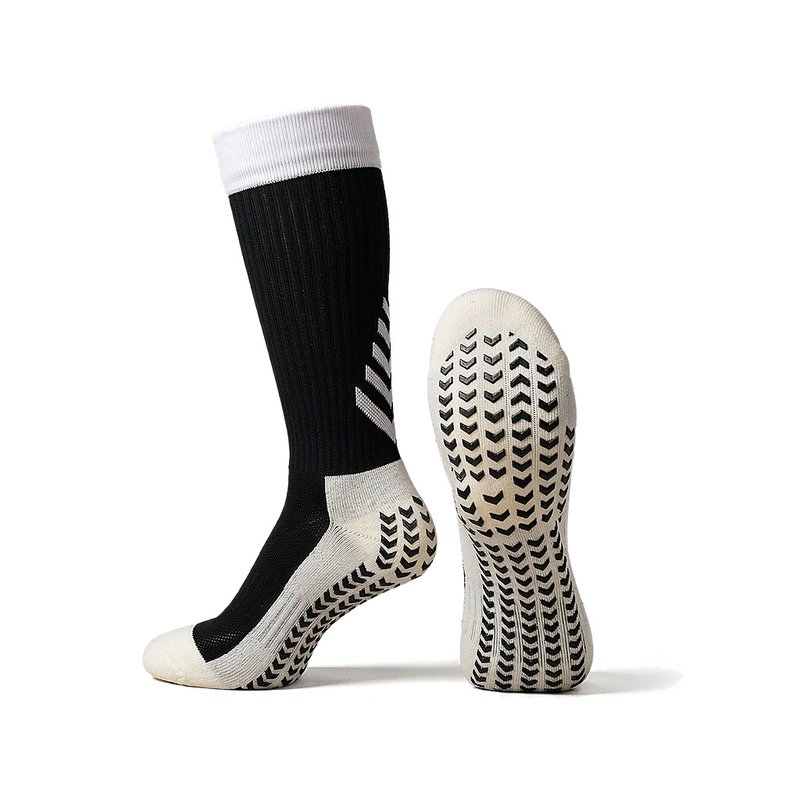
A brand that sells a fitted sock should send the chart it sells against, because a scaled-up adult chart and a purpose-built one are not the same garment. The size range is made to your chart rather than to a stock grid, and the foot length behind each size is stated on the sheet.
Where it applies: Fitted programmes, women's and children's ranges, multi-market size sets.
You decide: The size break, the foot length behind each size, and the grade between them.
Evidence: the size chart published for importers — see the size chart page.
A repeat runs on the locked sheet
Construction, yarn, colour and the approved sample are fixed by the first production run, and colour is bought to a dye lot locked per order. A reorder is a repeat against that sheet rather than a new brief, which is what makes a second season land on the same colour as the first.
Where it applies: Annual programmes, scheduled call-offs, colourway extensions.
You decide: Whether the repeat is a straight run or carries a colourway change.
Evidence: reorder timing on this site — see the reorder lead time page.
The documents travel with the goods
The invoice and packing list are issued with the shipment, plus a certificate of origin where the destination asks for one. The certificates held by the factory entity are published with their numbers and dates, so a compliance desk can check them before a purchase order is raised rather than after.
Where it applies: Customs entry, retailer onboarding, marketplace compliance files.
You decide: Which documents and which certificate copies your market needs in the file.
Evidence: the certificate numbers and dates published here — see the certificates section.
Two styles already branded for a customer
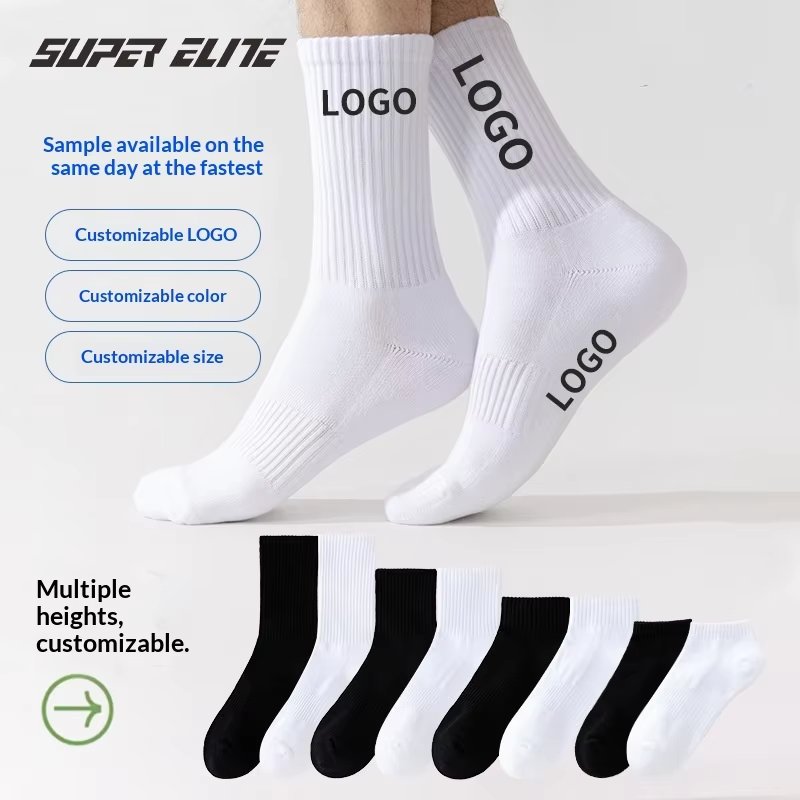
Both are current listings on this floor and both went out carrying somebody else's mark. Each card opens the style's own page.
What a private label buyer should not assume
Publishing the limit is cheaper for both sides than discovering it after the deposit is paid.
- No price list. Costing follows your specification, colour count and quantity onto the proforma invoice.
- No OEKO-TEX or GRS file under our name. If your market requires one, name it in the brief and the reply says what can and cannot be supplied.
- No buyer names. A customer's programme is not ours to publish as a reference, so it is not used as one here.
- No instant yes on a construction. Work outside what this floor holds is refused rather than passed to another factory.
- No screen colour. Colour is matched to a physical reference you send, then locked to a dye lot per order.
- No medical-device claim. The compression line here is a sock knitted to a 20–30 mmHg band, not a registered medical device.
Who owns the design, what goes on the pack, and when does it ship
Does the design have to be mine?
No. On this floor both routes are open: your own design produced to your specification, or a style that already exists here carrying your mark and a changed colourway. The second route is faster because the construction is already sampled; the first is what you take when the shape itself is the product.
What can go on the pack as well as the sock?
Size and care labels, a header card, an OPP bag and a printed box, each confirmed as a packing line on the proforma invoice. The sock mark and the pack mark are two separate decisions, and plenty of programmes use one without the other.
When does the first bulk run land?
Sampling typically takes 3–5 days after the brief and artwork is confirmed, and bulk runs 20–30 days after the deposit is received and the sample is approved. Sea transit adds its own window on top, so the date to plan backwards from is the campaign date, not the order date.
Send the mark, the chart and the pack, in one message
Attach the artwork for the cuff mark and the labels, name the size chart you sell against, and say what the pack has to carry. The reply comes back within one working day with the construction for each line, the per-style minimum in writing, the sample route and the documents that travel with the shipment.
Michelle Zhang, Export sales manager, answers enquiries within one working day — sales@sockwholesalers.com, +86-13761030160 (WhatsApp same number).