 Sock Wholesalers
Page last updated: November 2, 2026
Socks for workwear brands are judged on weight and reinforcement, not on how they feel in the hand
A work sock is bought against a boot, a shift pattern and a replacement interval, and it is priced by what it takes to survive them: more yarn, a denser knit and two reinforced points. So the decisions are the weight per pair, which reinforcement goes at the heel and at the toe, the cuff height against the boot collar, and the evidence a buyer can put in a file when the sock is specified for a workforce rather than sold off a shelf.
The table underneath is the sheet a workwear quotation is built on. Published lines are printed elsewhere on this site and read the same here; the lines a workforce actually turns on — weight, reinforcement and wear — are quoted, because they follow the brief rather than a page.
Weight per pair, two wear points, and the height above the boot
Each card is one decision a workwear buyer makes per style, with the line on the specification sheet where it is fixed.
Heavy is a figure, and the figure is per pair
A heavy crew carries more yarn per pair, longer machine time and a higher cost per pair, so the comparison a workwear buyer wants is weight per pair on the sample sheet rather than an adjective in a brochure. Weight is not published here because it follows the yarn and the size band, and a figure printed on a page would be wrong for the next order.
Where it applies: Boot socks, industrial laundry programmes, a uniform range sold on wear rather than on hand feel.
You decide: The weight band you want, the yarn it is worked in, and the price per pair you are trading against it.
Evidence: why the reference is the signed sample — see the QC checklist page.
The heel and the toe are the two places that open first
Reinforcement is either a denser knit at the wear points or a second yarn worked in, and it is asked for by name: a reinforced heel, and a toe that is machine linked with a reinforced seam. Both show on the sample, so the brief says which one your buyer or your tender expects instead of leaving the floor to choose for you.
Where it applies: Boot socks, warehouse and site work, a uniform programme where the sock outlives the first sole.
You decide: Denser knit or second yarn, at which two points, and whether the toe link carries the reinforcement too.
Evidence: the heel and toe checks the floor runs — see the QC checklist page.
The cuff has to clear the boot collar
A work sock is sized to a boot rather than to a fashion line, so the rib cuff is knitted to sit above the boot collar and the size band is the band you issue, half sizes included. Cuff diameter and garment length are separate fields on the chart, which is what keeps a sock from sliding down inside a boot halfway through a shift.
Where it applies: Boot and safety-boot wear, a size band issued by an employer, mixed cartons to more than one site.
You decide: The cuff height above the boot collar, the band you issue, and the split per carton.
Evidence: the fields a chart has to carry — see the size chart page.
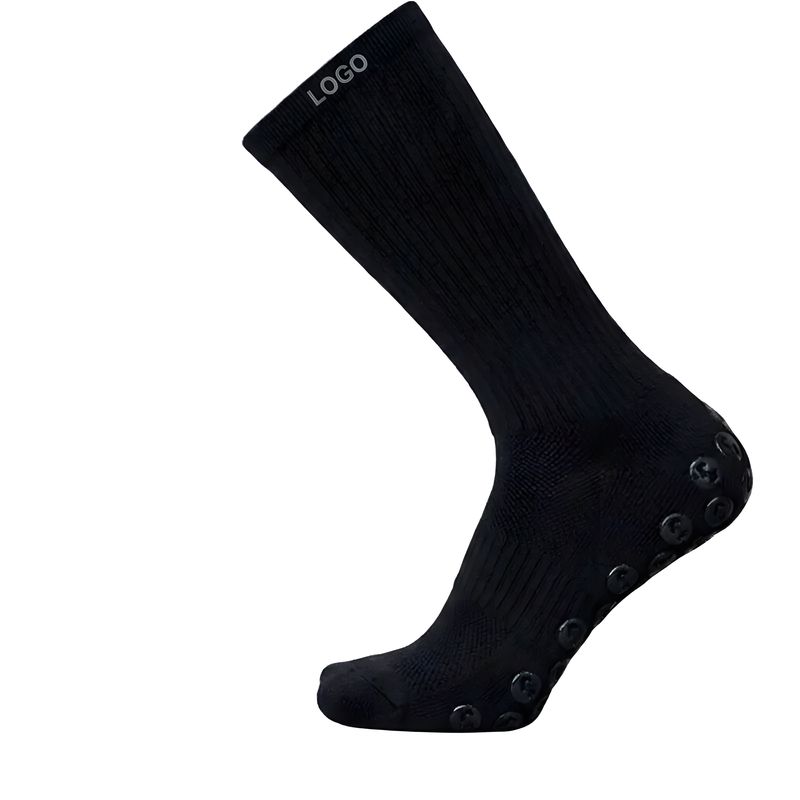
What a workwear buyer can read here, and what only the brief settles
A heavy sock turns on three things that are on no web page: the weight per pair, the reinforcement, and the point at which a pair is replaced. This table says which lines are printed and which arrive with your quotation.
Terms for a workwear sock order. Published lines are printed on this site; quoted lines are settled on your proforma invoice against the approved sample.
- Order size
- 1,000 pairs per style
- Sample
- 3–5 days
- Bulk lead time
- 20–30 days
- Size range
- XS–XXL on request
| Term | What we publish | How your own order sets it | Where it is published |
|---|---|---|---|
| PublishedRun per construction | 1,000 pairs per style for bulk orders, counted per style rather than per order. | A change of weight or reinforcement makes a new style, so a light sock and a heavy sock for the same workforce are two runs and two samples. | Quote page, terms page and every product page. |
| QuotedWeight per pair | Not published. It follows the yarn and the size band, and a figure printed here would be wrong for the next order. | The weight you set, measured on the sample you approve and written on the specification sheet that travels with the order. | Weight field on the specification sheet and the sample you sign. |
| QuotedHeel reinforcement | Reinforcement is either a denser knit at the wear points or a second yarn worked in; both are seen on the sample. | Which of the two, and whether the heel is reinforced alone or the sole is worked with it. | Construction field on the specification sheet. |
| QuotedToe construction | Machine toe linking with a reinforced seam is the operation to ask for by name, and it is approved on the sample. | Whether the toe link carries the reinforcement, and what the seam has to look like on the inside. | Construction field on the specification sheet. |
| PublishedSampling | Typically 3–5 days after the brief and artwork; charged per style, credited against your first bulk order; you cover the courier. | One charged sample per style, worn the way the workforce wears it before the run is committed. | Sample policy page, quote page and buyer FAQ. |
| PublishedProduction window | Typically 20–30 days after deposit received and sample approved. | Counted from deposit and approval, which is what decides whether a tender's delivery date holds. | Quote page, terms page and buyer FAQ. |
| QuotedCuff height | The cuff is a rib knit made to clear the boot collar; the height is a line on the sheet rather than a fixed figure. | How far above the boot collar the cuff sits, and the cuff diameter behind it. | Size chart page and the specification sheet. |
| QuotedReplacement interval | No wear figure is published. The bench tests on this site measure abrasion, wash loss and elastic recovery, not a service life on a foot. | The interval your buyer replaces on, and the reinforcement budget that buys it — the honest comparison is weight and reinforcement against that interval, not price per pair. | Durability testing page and the sample record. |
Two rows carry the whole account: weight per pair and the toe construction. One is why a heavy sock costs more, the other is why it stops coming back as a return, and both are settled on the sample rather than on a page.
What a workwear account keeps once the first run is issued
A workwear order is usually renewed rather than extended, so what matters after the first delivery is what the account can repeat, what a report from the wearers changes, and what evidence the next tender asks for.
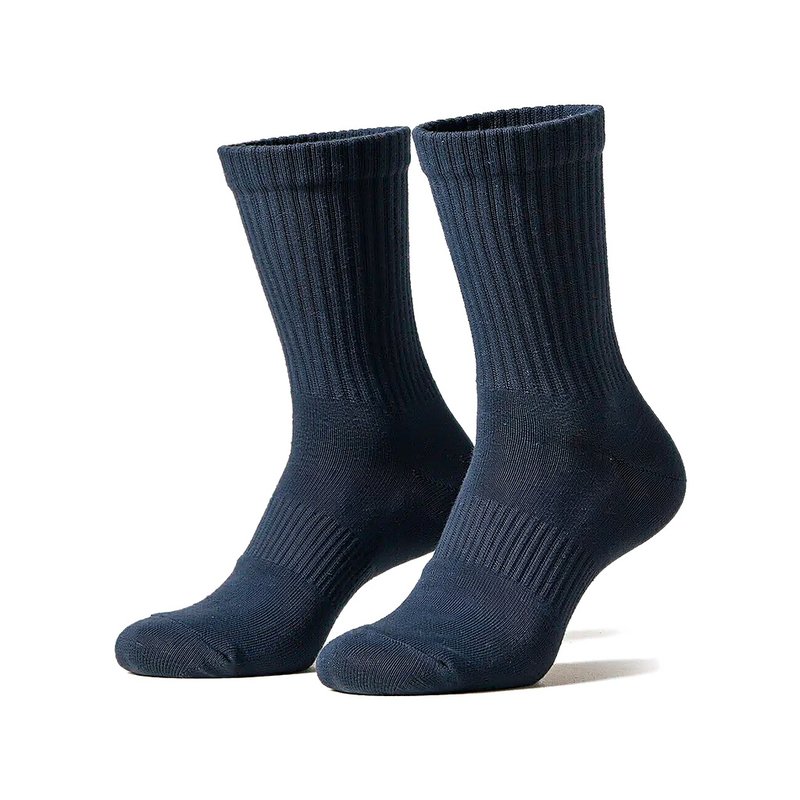
The pair that failed tells you the next specification
Ask wearers which point opened first — heel, toe, cuff or sole — and after how many washes, rather than whether they liked the sock. A reinforced heel is wasted money if the toe is what goes, and a denser knit is wasted if the boot is what wears the sock out. That one detail is the difference between a second order that fits and one that repeats the first.
Where it applies: Uniform renewals, a second issue to the same workforce, a tender written after a trial batch.
You decide: Where the wear happens, and which reinforcement the next run pays for.
Evidence: the tests and what each one shows — see the durability testing page.
A repeat runs on the sheet, not on a description
The first production run fixes the construction, the yarn, the colour and the sample on file, so a renewal is a repeat against that sheet. Nothing about a heavy crew is guessable from a description, which is why a second source asked for the same sock usually delivers a different one, and why the sheet is the only thing that keeps two issues identical.
Where it applies: A standing uniform programme, a renewal a year later, a tender that names last year's sock.
You decide: Whether the renewal is a straight repeat or carries a weight or yarn change — either of those is a new sample.
Evidence: what a repeat carries over — see the reorder lead time page.
The inspection record is what goes in the file
The floor checks stitch density, foot length, cuff tension, toe linking and heel position during the run and against the signed sample, and the record is available against an order number. For an account that has to justify a specification to a safety officer or a procurement committee, that record is worth more than any claim printed on a page.
Where it applies: Tender files, safety and procurement sign-off, a buyer answering an internal audit.
You decide: Which checks your file needs, and whether a third-party inspection is booked on top of them.
Evidence: the checks and their reference points — see the QC checklist page.
Two crew bodies a work order is built on, and what changes for yours
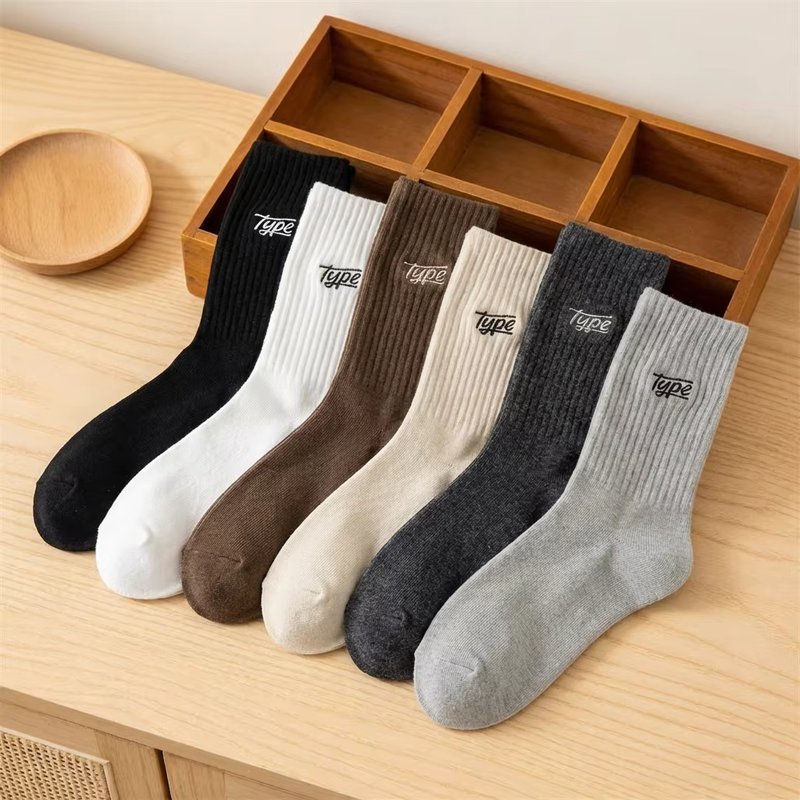
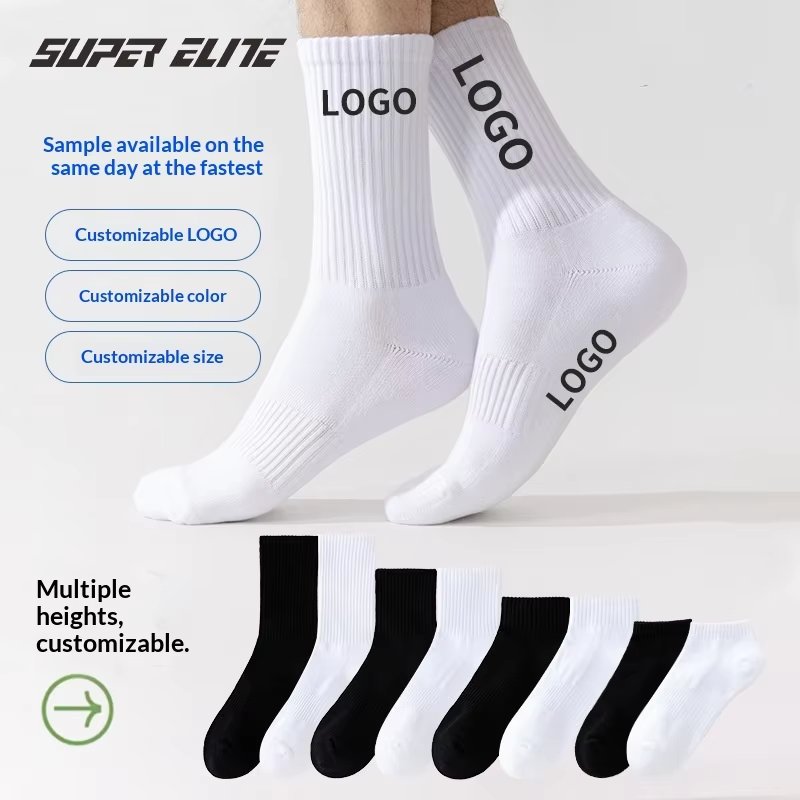
Neither card below is listed as a work sock. The work construction itself is already set out on the work socks page — a heavy blend, cushioned at the sole and the heel, with a rib cuff that stays above the boot line — but no work SKU sits among the products listed on this site, so weight per pair and the two reinforcement operations are quoted per order against your sample. What the two cards show is the crew body a heavy version starts from.
What a workwear buyer should not assume
Publishing the limit costs less than discovering it after a workforce has already been issued with the first run.
- No work SKU in the product list. The work construction is described on the work socks page, but no work style is listed among the products on this site, so weight and reinforcement are quoted per order against your sample rather than picked from a page.
- No wear figure. The bench tests here measure abrasion, wash loss and elastic recovery; none of them predicts how long a pair lasts on a shift.
- No OEKO-TEX or GRS file under our name. If a tender or a retailer requires one, name it in the brief and the reply says what can and cannot be supplied.
- No price per pair without the weight. Costing follows the yarn, the weight and the reinforcement onto the proforma invoice; there is no price list on this site.
- No half sizes promised blind. The band you issue goes into the chart, half sizes included, so send the band rather than a shoe size.
- No medical or orthopaedic claim. A reinforced work sock is a sock; nothing here is offered as a device or a therapeutic product.
What makes a pair last, how do I compare two prices, when do I renew
What decides whether a work sock lasts a season?
Four things: the weight of yarn per pair, a denser knit or a second yarn at the wear points, a reinforced heel, and a toe that is linked and reinforced rather than left plain. Weight is not published here because it follows the yarn and the size band; ask for it on the sample sheet and the comparison between two candidate socks stops being an opinion.
How should I compare two prices?
By weight, reinforcement and interval rather than by price per pair. A lighter sock for indoor or warehouse use costs less and wears out sooner, and that trade is worth naming in a tender; the figure that decides it is the replacement interval your buyer works to, which is set on your side of the table rather than on ours.
When does a renewal have to be ordered?
Backwards from the issue date, not the order date: sampling 3–5 days after brief and artwork, bulk 20–30 days after deposit and sample approval, then approx. 25–40 days by sea or 5–10 days by air. A renewal against the sheet on file starts at the deposit, with no new sample round in front of it.
The band you issue, the reinforcement you expect, the weight you want
Send the size band your workforce is issued, name the reinforcement your buyer or tender expects, and say whether the pairs ship mixed per carton. The reply comes back within one working day with the construction for each style, the per-style minimum in writing, the sample route and the point where freight has to be booked.
Michelle Zhang, Export sales manager, answers enquiries within one working day — sales@sockwholesalers.com, +86-13761030160 (WhatsApp same number).