Qingsheng Knitting logoSock Wholesalers Request a quote

Page last updated: November 2, 2026

Exporter · terms, documents, transit

Exporter of socks

Exporting is the half of the order that happens after the socks exist: which term the price sits on, which documents travel, and how long the goods are in transit before they are someone else’s stock problem. It is all published here rather than settled case by case.

This page is for the person who has to get the goods into a country, not the person who chooses the style. It names the four trade terms we quote, the four documents that travel, and the transit windows the site publishes by mode.

The trade term decides the rest

Four Incoterms we quote, and what each one moves

Incoterms® 2020 is the current ICC rulebook behind all four. The term is confirmed on your quotation and printed on the proforma invoice, because it decides which costs sit on which side — and a price compared across two terms is not a comparison.

The four terms we quote. Duty treatment is confirmed on your quotation, not assumed here.
TermWhat it meansWhere our responsibility endsWhat it changes on your invoice
EXW — ex works We hand the goods over at the factory door and you carry everything from there.The factory gate at Datang, Zhuji.The lowest quoted figure, and the most work left on your side.
FOB — free on board We deliver the goods onto the vessel at the Chinese port, and you carry the main carriage.The vessel at the port of loading.The usual term for a first sea shipment.
DAP — delivered at place We carry the goods to your named place; the duty treatment is confirmed on the quotation.The named place, with duty treatment stated.Carriage in the price; duty treatment printed beside it.
DDP — delivered duty paid We carry the goods to your destination with duty and taxes paid.Your destination, cleared.The highest quoted figure, and the simplest landed cost.

Two of these four move the same sock at very different money. That is why the term, not the unit price, is the number worth comparing first.

Documents and transit

Eight export lines, from port to proof of delivery

Each row is something that has to be right before the goods are on the water. The fourth column says where the detail already sits on this site.

The export side of a sock order. Transit figures are typical planning values, not terms of sale.
LineWhat we publishWhat decides it on your shipmentWhere it is published
PublishedSea transit Approx. 25–40 days, depending on destination.The port pair and the sailing you book onto.Shipping volume and the FAQ.
PublishedAir transit Approx. 5–10 days, depending on destination.The airport pair, and how dense the cargo actually bills.Shipping volume.
PublishedExpress transit Approx. 3–7 days, depending on destination.The courier lane and the customs channel at arrival.Shipping volume.
PublishedInvoice Travels with the shipment, issued by the contracting entity.The trade term and the currency printed on the proforma invoice.Document desk.
PublishedPacking list Travels with the shipment, per style and per carton.The case pack, the carton marking and any label you send; the current template is v2026-10.Client documents.
PublishedCertificate of origin Added where the destination asks for one.Your customs broker’s requirement, and whether the destination scheme needs it.Document desk.
QuotedDuty treatment Confirmed on your quotation, against the term you choose.The destination’s tariff position and whether the term is DDP or DAP.Wholesale terms.
PublishedClaims window Raise it in writing within 30 days of the goods arriving, with your order number.How long the batch stays identifiable at your end.Returns and after-sales.

The 30-day window is the one figure on this page that is about after the transit, and it is the one most often discovered too late: a claim raised in week six asks us to identify a batch that has already been broken up.

Four windows to plan against

Export timing, from deposit to your dock

These are the published figures for planning. The binding dates are the ones on your proforma invoice, and the trade term decides who owns which leg.

Sampling
3–5 days
Bulk production
20–30 days
Sea transit
25–40 days
Air transit
5–10 days

Add them to see why a first sea shipment is a two-month exercise from a confirmed brief. A 1,000-pair run at 100 pairs a carton is ten cartons and under a cubic metre, which is why a small first order is usually an air or express decision rather than a container one.

Where the responsibility actually sits

Six costs that move when the term changes

The same sock, the same cartons, four different prices. Each card is one cost line that changes hands when the term changes, and the page that already documents it.

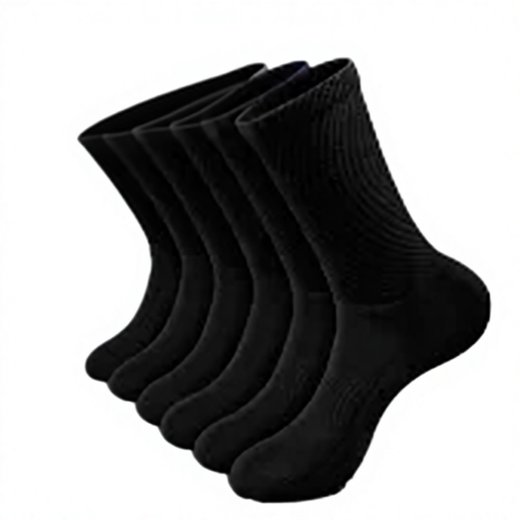
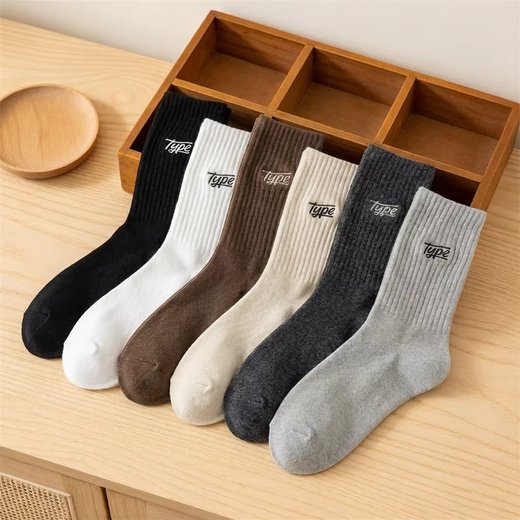
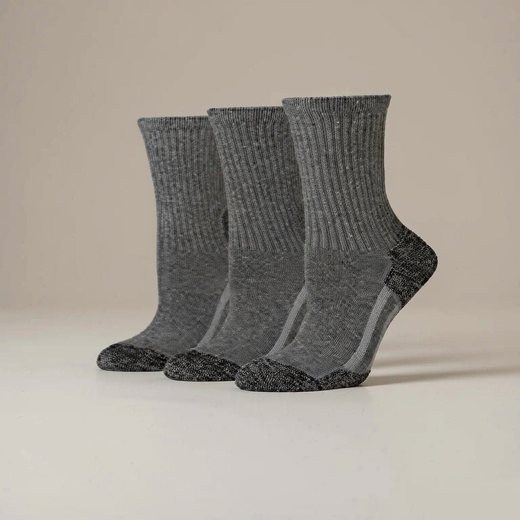
Thin ribbed crew socks in four colourways

Inland to the port

At EXW the goods stop at the factory door. From FOB onward, getting ten cartons to the port of loading is on our side of the line, and it is inside the quoted figure.

Moves at
EXW → FOB.
Not in the sock price
Your inland leg from arrival.

Evidence: Wholesale terms defines the four.
Cushioned athletic crew socks, white with a grey sole

Main carriage

The ocean or air freight is the largest single line after the goods themselves. At FOB you book it; at DDP or DAP it sits in the quoted figure, which is why those two numbers look so much larger.

Moves at
FOB → DAP/DDP.
Decided by
The mode and the sailing date.

Evidence: Shipping volume.

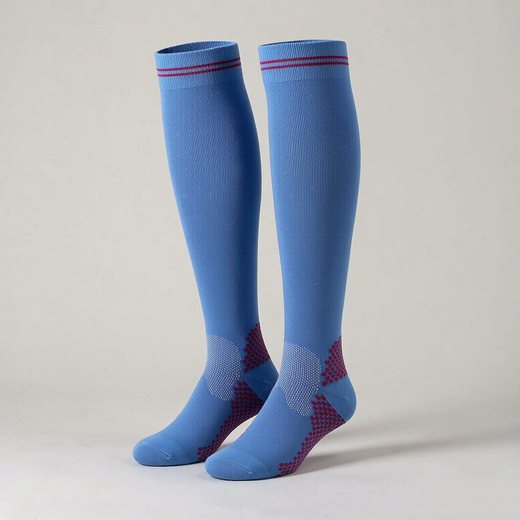
Compression crew socks, pair shown from the front

Duty and taxes

Duty is what separates DAP from DDP: at DAP it stays yours to clear, at DDP we carry it with the goods paid. The treatment is confirmed on your quotation rather than assumed from the term name.

Moves at
DAP → DDP.
Decided by
Your destination’s tariff position.

Evidence: Wholesale terms.

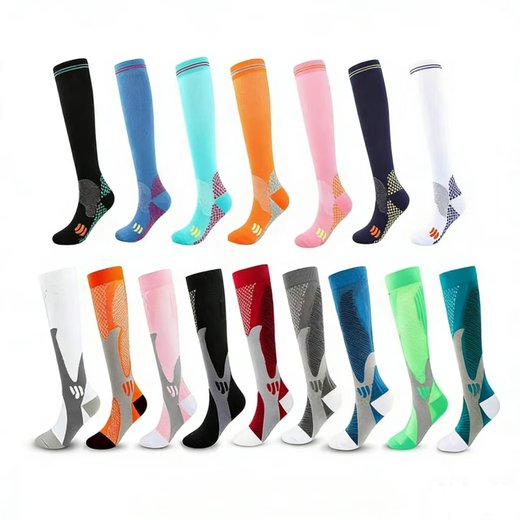
Thigh-high compression socks, flat product photograph

Customs paperwork

Invoice and packing list travel with every shipment, and a certificate of origin is added where the destination asks. None of that changes with the term; what changes is who files it.

Always travels
Invoice and packing list.
Added when asked
Certificate of origin.

Evidence: Document desk.

Cartons on pallets in the warehouse, ready for collection

Carton marking

Shipping marks and any carton label you supply are confirmed per style, on the packing line of the proforma invoice. A change late in the run is a new packing list, not an edit.

Confirmed on
The packing line.
Template
v2026-10.

Evidence: Packaging options.

Youth football grip socks, knee high

The claim clock

The only leg after arrival that is on a published clock: 30 days from the goods landing, in writing, with the order number. After that the batch is no longer identifiable.

Window
30 days from arrival.
Needed
The order number, in writing.

Evidence: Returns and after-sales.

What an exporter page must not blur

Three things we do not settle on a page

Export terms are where optimism costs money, so these three stay where they belong: on your quotation, with your numbers.

  • No landed cost on this site. A landed cost needs the term, the mode, the destination and your broker’s fees. We publish the components; the total is yours to build, and the proforma invoice is where the binding figure sits.
  • No freight rate printed. Rates move with the lane and the date. What we publish is transit time by mode, which is the part that does not move with the market.
  • No promise on a customs outcome. We can say which documents travel and where a certificate of origin is added. What a destination authority does with them is not ours to promise, and a supplier who promises it is guessing.
Read next

Four pages the export desk actually uses

Each of these exists because the question comes up on every shipment, and answering it in one place is faster than answering it in an email thread.

Four pages, and the export question each one answers.
PageWhat it coversThe question it answers
Wholesale terms Incoterms, duty, leads, returns and claims.What the terms actually say, line by line.
Document desk The document set and the current templates.What travels, and in which version.
Shipping volume per carton Cartons, cubic metres and the worked example.What a shipment actually fills and weighs.
Wholesale sock terms and trade glossary EXW, FOB, DDP and the rest, defined.What each term means without a sales gloss.
Name the destination

Send the market, and we quote the term for it

The destination decides the term, the documents and the transit window. Send it with the quantity and the styles and the reply comes back within one working day with a reference range, the term it sits on, and what travels with the shipment.

Michelle Zhang, Export sales manager, answers enquiries within one working day — sales@sockwholesalers.com, +86-13761030160 (WhatsApp same number).