Qingsheng Knitting logoSock Wholesalers Request a quote

Page last updated: November 2, 2026

Bulk · volume, cost and cartons

Bulk sock orders

Bulk changes three things and nothing else: how the fixed setup cost is spread, how many cartons your order becomes, and which freight mode stops making sense. The sock does not change, the minimum does not change, and the price per pair moves for a reason you can calculate.

This page is the arithmetic. Every figure below is printed elsewhere on the site already — the quote page, the packing page, the shipping-volume page — gathered here so you can size a run before you ask anyone for a costing.

Read the tags before the table

Three states a figure can be in

A bulk order mixes fixed numbers with numbers that only exist once your specification does. Marking which is which is the difference between a quotation you can compare and one you cannot.

Published

A fixed figure, printed here

1,000 pairs per style, 20–30 days bulk, 25–40 days by sea. These do not move per order, and if one changes, this page changes with it.

Quoted

Set per style, on your quotation

Pairs per carton, colour split, freight mode, trade term. Two bulk runs of the same sock at different carton rules price differently, so those values travel with the quote instead of sitting here as if they were universal.

Not held

Anything we cannot print

A stock list, a price list, a customer name, a discount ladder. A bulk page that fills those gaps with adjectives is the page a buyer regrets trusting.

The volume arithmetic

Eight lines that decide what a bulk run costs

Each row names the mechanism, the figure we publish for it, and the page where that figure is already printed. The third column is the part most quotations leave out: what your own order does to the number.

Bulk order mechanics. The fourth column points at the page each claim comes from, so you can check it without asking us.
MechanismWhat we publishHow volume moves itWhere it is published
PublishedThe counting unit 1,000 pairs per style, counted per style and not on the order total.Two styles means two runs of 1,000; a bigger run never buys down the minimum on a second style.Quote and every product page.
PublishedSetup spread A run at 1,000 pairs and a run at 5,000 pairs do not share the same cost structure.The drop depends on the style, not on a discount table: the fixed part is knitting setup, yarn booking and sampling.Negotiating sock pricing.
QuotedColour split At 1,000 pairs, three colours works out at about 333 pairs a colour and five at 200.Each added colourway is another yarn position; the split is yours to set and it is priced with the run.Retail chains, where the split is the whole job.
QuotedCase pack Export packing as standard; retail options quoted per style.100 pairs to a carton is the figure used in our own arithmetic, but your DC’s receiving rules decide the real one.Packaging options.
PublishedVolume to freight One pair takes 0.00096 m³, so 10,000 pairs at 100 a carton is 100 cartons and 9.6 m³.Cross the LCL-to-FCL line and the cheapest mode changes; that line is a volume decision, not a price negotiation.Shipping volume per carton.
PublishedTransit Approx. 25–40 days sea, 5–10 air, 3–7 express.Dense cargo bills close to its actual weight, so air stops being competitive quickly on socks.Shipping volume and the FAQ.
PublishedProduction window Typically 20–30 days after deposit received and sample approved.The window is published as a range because the two ends of it are different line loadings, not different promises.Wholesale terms.
QuotedDeposit and balance Payment runs through the entity named on your quotation and proforma invoice.The split is settled with the order, and the proforma invoice carries the validity dates and the currency.Wholesale terms and document desk.

A bulk order that is priced lower than another is almost always a different specification, a different carton, or a different trade term — rarely a better deal on the same sock.

Five figures, one run

The size of a bulk order, in plain numbers

Take a single style, one colourway, 100 pairs to a carton. These are the figures that come out the other end, all of them published on this site.

Minimum per style
1,000 pairs
At 100 pairs a carton
10 cartons
At 10,000 pairs
9.6 m³
Bulk window
20–30 days
Sea transit
25–40 days

The 9.6 m³ figure comes from the worked example on the shipping-volume page, which also shows the same arithmetic at 1,000 pairs: ten cartons, under a cubic metre, and a freight decision that is not the one a 10,000-pair run makes.

What a bigger run cannot fix

Six things volume does not change

Buyers often assume a large enough order eventually moves everything. On this floor it moves the setup spread and the freight mode, and it leaves six things exactly where they were.

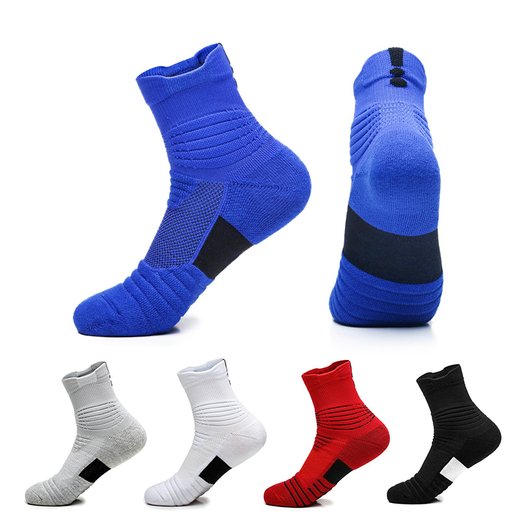
Terry-sole basketball crew socks in four colourways

The construction

Terry density, needle count and where the cushion starts and stops are set per style on the machine. Volume buys you a longer run of that machine setting, not a different one.

What we publish
The floor holds four production lines.
You decide
Which construction the style uses.

Evidence: Line count on about the factory.
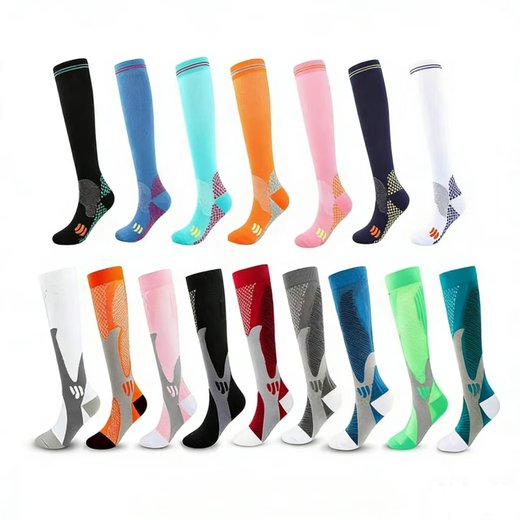
Thigh-high compression socks, flat product photograph

The class on the label

A compression class is a knitted property, not a volume one. 20–30 mmHg is what the machine holds for that style; ordering 20,000 pairs does not shift the band.

What we publish
The class is quoted per style.
You decide
Which class your claim needs.

Evidence: The band discussion sits on compression socks 20–30 mmHg.

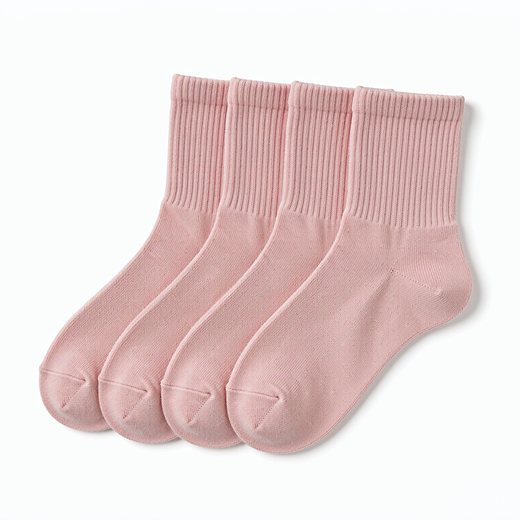
Pink women’s crew socks with a contrast cuff

The minimum per style

It is counted style by style, so a bulk order spread over six designs is six minimums. The figure does not fall because the order total is large.

What we publish
1,000 pairs per style.
You decide
How many styles to carry.

Evidence: Restated on quote and in the FAQ.

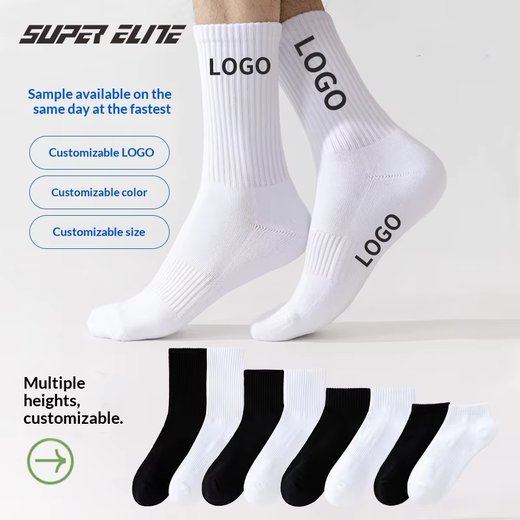
Cushioned athletic crew socks in a neutral colourway

The audit cover

BSCI and SEDEX cover the floor, not the order. A larger run is produced under the same two documents, and asking for a bigger order does not produce a third certificate.

What we publish
BSCI 26-0419962 and SEDEX ZAA600215648.
You decide
Whether those two cover your compliance desk.

Evidence: Numbers, holders and dates on contact.

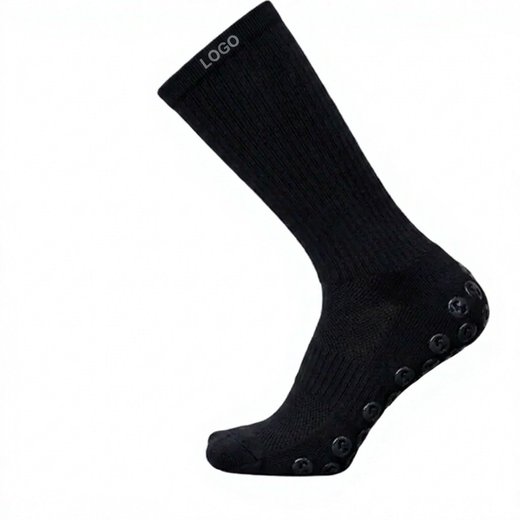
Non-slip breathable casual crew socks, pair shown from above

The sample you signed

Bulk is knitted to the approved sample. Nothing in the volume argument reopens the spec, and a change at this point is a new sample round, not a favour.

What we publish
Sampling typically 3–5 days.
You decide
What you sign off, and when.

Evidence: Sample policy, including the credit against the first bulk order.

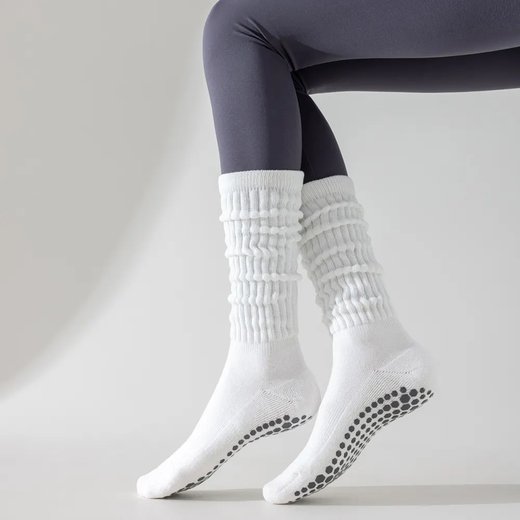
Long slouch crew socks with a non-skid sole, three pairs

The paperwork

Invoice and packing list travel with the shipment whatever the size of it, and a certificate of origin is added where the destination asks. A container does not simplify the document set.

What we publish
Invoice, packing list, CoO where required.
You decide
What your broker adds to that list.

Evidence: Document desk, template at v2026-10.

Where a bulk page usually oversells

Four things a bigger order will not change here

Volume is a real lever on cost and a false lever on everything else. These are the four places buyers most often expect it to work, and it does not.

  • No discount ladder. There is no published tier that a large enough order falls into; the costing reply is written against your specification, and the difference between 1,000 and 5,000 pairs comes from setup spread, not a schedule.
  • No sub-minimum style inside a big order. A 20,000-pair order can carry a 300-pair style only if that style is not a style — it is a variation of one that already runs.
  • No capacity promise by return. The floor has four lines; what is free in a given month is confirmed with the quote, not asserted on a page.
  • No weight-based freight saving on socks. Dense cargo bills close to its actual weight, so the sea-versus-air decision is made on volume and date rather than on a rate you can talk down.
  • No skipping the sample because the run is large. The bigger the run, the more the approved sample is the only thing protecting both sides.
  • No customer names as volume proof. The bulk runs on this floor are other people’s commercial information.
The four pages a volume question leads to

Where to check the arithmetic yourself

Each of these pages carries one of the figures above in full, with its own worked example. None of them is a sales page.

Four pages, the figure each one carries, and what you can do with it.
PageThe figure it carriesWhat you can do with it
Shipping volume per carton 0.00096 m³ per pair; 9.6 m³ at 10,000 pairs.Size your own carton count and quote a freight rate against a real number.
Packaging options Export packing as standard, retail formats quoted per style.Decide whether the case pack is a cost line or a shelf requirement.
Negotiating sock pricing Which part of the price is fixed setup and which is per pair.Argue about the right line instead of the total.
Reorder lead time What a repeat skips that a first order does not.Plan a second run without re-sampling.
Size the run, then send it

Put the style count and the carton rule in the brief

The two numbers that change a bulk costing most are how many styles the range carries and how many pairs go in a carton. Send both with the market, and the reply comes back within one working day with a reference range against your own arithmetic.

Michelle Zhang, Export sales manager, answers enquiries within one working day — sales@sockwholesalers.com, +86-13761030160 (WhatsApp same number).