Qingsheng Knitting logoSock Wholesalers Request a quote

Page last updated: November 2, 2026

Low MOQ · what a small first run can be

Low MOQ sock production

The honest version of low MOQ is a number and a counting rule, not an adjective. Ours is 1,000 pairs per style, counted per style rather than per order — which makes a six-style range six runs, and makes the first order of a startup a real minimum rather than a hopeful one.

This page exists because “low MOQ” is the most elastic phrase in the trade. It says what our floor actually holds at the low end, what a lower number does when it arrives as a question, and which of the costs in a small run do not shrink with it.

The floor, stated once

Four numbers that define “low” here

Low is relative to the floor that has to run it. These four are the ones that set where our low end sits, and all four are published elsewhere on the site in the same form.

Minimum per style
1,000 pairs
Counting rule
Per style
Sampling
3–5 days
Costing reply
1 working day

The 1,000-pair figure is described across the site as a starting point for negotiation rather than a fixed floor. That is a real distinction: the number can move for a construction the floor already runs, and it does not move for a new one.

What a small run is made of

Seven lines, and which of them shrink with volume

A first order of 1,000 pairs carries costs that a 10,000-pair run spreads and costs that stay exactly where they are. Knowing which is which is what makes a small order plannable instead of surprising.

Low-volume mechanics. The last column points at the page each claim is printed on.
LineAt the low endDoes it shrink with volume?Where it is published
PublishedYarn booking A 1,000-pair run still books yarn in the colour it needs.Partly. The minimum cone booking is a floor of its own, so five colourways at 200 pairs each cost more per pair than one colourway at 1,000.Yarn options.
PublishedMachine setup The machine is set for your style whether the run is 1,000 or 5,000.Yes, and it is the largest single thing volume spreads. This is why 1,000 and 5,000 do not share a cost structure.Negotiating sock pricing.
PublishedSampling One sample round, typically 3–5 days after brief and artwork.No. It is charged per style and credited against the first bulk order, at every order size.Sample policy.
QuotedColour count At 1,000 pairs, three colours is about 333 pairs each and five is 200.No — more colours at a fixed total means smaller lots per colour, and the split is yours to set.Retail chains.
QuotedCase pack 100 pairs to a carton is the figure our own arithmetic uses; your DC may want another.No. The packing line is confirmed per style at any size.Packaging options.
PublishedFreight 1,000 pairs at 100 a carton is ten cartons, well under a cubic metre.No, and the mode changes: a small run is air or express territory long before it is a container.Shipping volume.
PublishedProduction slot Bulk is typically 20–30 days after deposit and approved sample.No. A smaller run waits in the same queue behind the same four lines.About the factory.

The two lines that dominate a small order are machine setup and freight — which is why the cheapest way to test a style is usually one colourway, not four, and why the mode matters more than the rate.

The six questions a first run asks

What a startup should decide before the brief

Most small orders get expensive at the decision stage rather than at the knitting stage. These are the six decisions that set the cost of a first run, each with the page that already answers it.

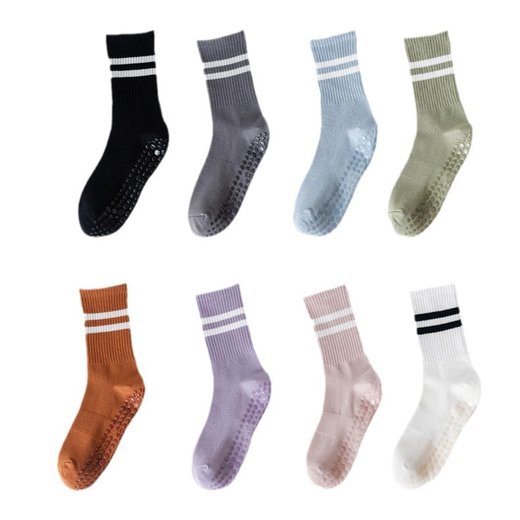
Silicone grip yoga ballet socks, pair shown flat

One style or a range

The minimum is per style, so the first real decision is not quantity but breadth. One style at 1,000 pairs and four styles at 1,000 each are different businesses, not different order sizes.

What we publish
1,000 pairs per style.
You decide
How wide the first range is.

Evidence: Restated on quote.
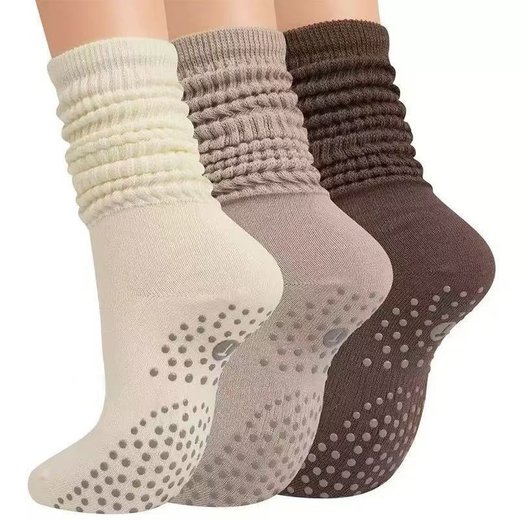
Pilates grip socks with a knitted logo, four colourways

One colourway or four

Colour is the cheapest place to take cost out of a first run and the most expensive place to add it back. At 1,000 pairs a four-colour split is 250 pairs a colour.

What we publish
How the minimum splits.
You decide
The colour count and ratio.

Evidence: The split arithmetic is on retail chains.

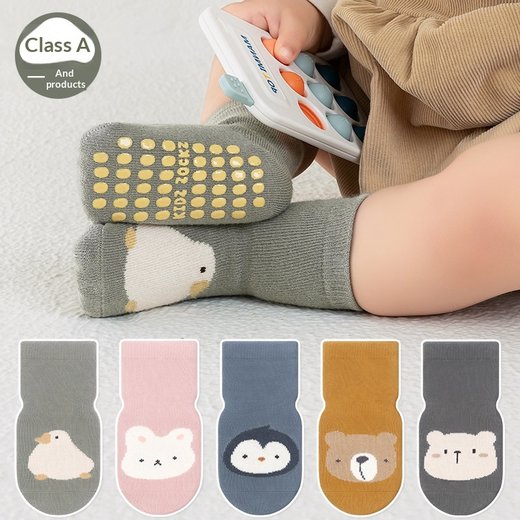
Baby and toddler anti-slip floor socks with a 3D cartoon sole

Stock or custom

A custom construction needs a sample round first; a construction the floor already runs gets to bulk faster. That difference is a few weeks, and it is a real difference on a launch date.

What we publish
Sampling 3–5 days; bulk 20–30 days.
You decide
Whether the first run is a variation or a new knit.

Evidence: Custom socks vs stock socks.

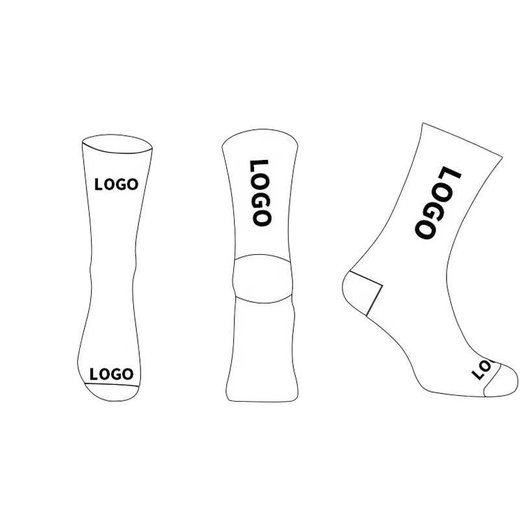
Winter crew socks with knitted embroidery on the cuff

The artwork

The brief is not usable until the artwork is. Sampling is counted from the day brief and artwork are both confirmed, which is why a logo that arrives in week three moves the whole plan.

What we publish
Sampling starts after brief and artwork.
You decide
How fast the artwork lands.

Evidence: Design process.

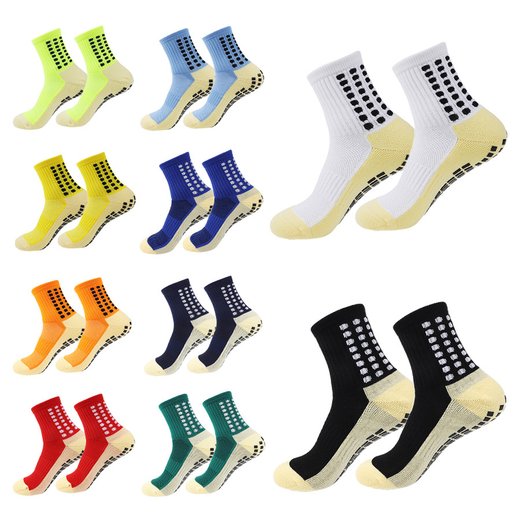
Anti-skid crew socks with a dotted grip sole

The freight mode

Ten cartons is a parcel decision, not a container decision. On a first run, sea is often the false economy and express is often the right one, because the stock is what the launch runs on.

What we publish
25–40 sea, 5–10 air, 3–7 express.
You decide
What date the stock has to be live.

Evidence: Shipping volume.

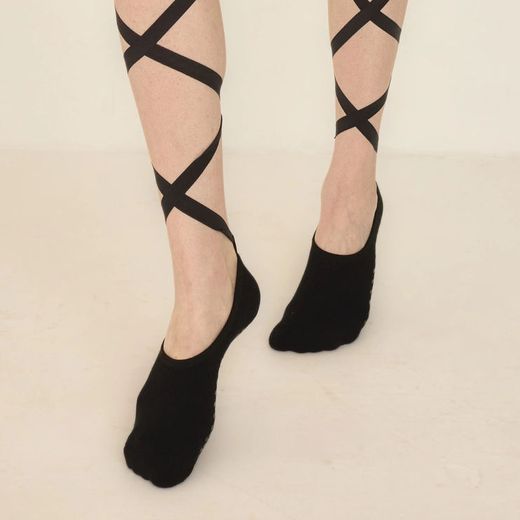
Women’s lace-up ballet socks in a soft colourway

The reorder

The second run is shorter because nothing has to be re-sampled, and it is the moment a “low MOQ” question becomes a plan rather than a risk.

What we publish
What a repeat skips.
You decide
How much of the style repeats.

Evidence: Reorder lead time.

The part a low-MOQ page usually hides

Three things we will not call low MOQ

If a supplier’s low-MOQ page does not name a number, the number is decided in the email after you send the brief. These three are named here instead.

  • No per-order minimum dressed as per-style. 1,000 pairs counts per style. A six-style range is 6,000 pairs, and a page that says “from 1,000” without the counting rule has said nothing.
  • No sample-sized production run. 50 pairs is a sample, not a low-MOQ order, and it is priced and shipped as a sample.
  • No free first sample. The sample fee is charged per style and credited against the first bulk order — that is the closest thing to a free sample on this floor, and it is a credit, not a gift.
  • No promise that the floor will move. The 1,000-pair figure is a starting point for negotiation. A question below it goes to the desk as a question and comes back with an answer for your construction, not a slogan.
Read next

The pages a small first order needs

A first run lives or dies on four documents: a written minimum, a sample policy, a packing line and a freight number. Each has its own page.

Four pages and what each one settles for a first order.
PageWhat it settlesWhy it matters at 1,000 pairs
Wholesale sock FAQ The route from brief to bulk.Shows what happens between the deposit and the run, and what the sample fee becomes.
Sample policy Timing, the fee and the credit.The single largest avoidable cost in a first order is a second sample round.
E-commerce sellers A worked small-run case.The floor described from the point of view of someone selling one listing at a time.
Shipping volume What ten cartons actually is.Under a cubic metre, which is why the mode matters more than the rate.
Ask with a number attached

Send the style, the colours and the quantity you had in mind

If the number you have in mind sits below 1,000 pairs per style, send it anyway with the construction you want. The reply says whether this floor can run it, what the sample would need to prove, and what the smallest honest order is for that knit.

Michelle Zhang, Export sales manager, answers enquiries within one working day — sales@sockwholesalers.com, +86-13761030160 (WhatsApp same number).